
In 1950, the American diplomat George Kennan, the chief architect of the U.S. Cold War policy of “containment,” lamented Latin American sovereignty. On assignment in Caracas, Venezuela, Kennan complained that American firms had to pay the Venezuelan government, then a U.S.-backed dictatorship, a “ransom to the theory of state sovereignty and the principle of non-intervention” for oil. At the apex of U.S. post-war power, in the mind of the conservative statesman, Latin American sovereignty tied down “the white god of capitalism like the Lilliputians tied down Gulliver,” per Pulitzer Prize-winning historian Greg Grandin. With the U.S. government’s illegal abduction of Venezuelan president Nicolás Maduro and President Donald Trump’s subsequent boast that the U.S. would “take back the oil” and “run” the country, it appears now is the time of the white god.
And yet, the U.S.’s kidnapping of Maduro, following the extrajudicial killing of at least 115 alleged “drug traffickers” in boat strikes in the Caribbean Sea (and two more killed since), is part of a longstanding historical pattern of U.S. intervention in Latin America. An opinion piece in The Stanford Daily supporting the attack, a riposte to it by a writer willing to “accept damage to our [US] global reputation […] to successfully bring democracy to Venezuela,” followed by yet another, likewise underscores a troubling but unsurprising surge in apologia for the U.S. government’s gross violation of the United Nations charter. As UN experts warn, “democracy cannot be built on violations of international law.”
Whether the Trump administration is even narrowly concerned about democracy in Venezuela can be easily checked: first, by briefly reviewing the historical record, and second, by examining domestic politics and attitudes toward other authoritarian regimes.
In the 20th century, the U.S. government intervened at least 41 times in Latin America and the Caribbean. U.S. interventions, often justified by the 1823 Monroe Doctrine and Theodore Roosevelt’s 1904 corollary (now the 2026 “Donroe Doctrine”), had violent consequences for the region. Between 1915 and 1934, the U.S. government occupied Haiti. There, after taking $500,000 in gold from the country’s national bank on behalf of Citigroup’s predecessor and their Wall Street counterparts, U.S. Marine battalions “dissolved Haiti’s parliament at gunpoint,” established a forced labor system and killed thousands. Following the 1954 CIA-led coup d’état in Guatemala, which deposed democratically-elected President Jacobo Árbenz, the U.S.-backed Guatemalan military killed more than 200,000 unarmed, mainly indigenous Mayans, using hit lists provided by the CIA. In the early Cold War, John P. Longan, a former Border Patrol officer and bellwether of Operation Wetback turned CIA agent, trained far-right death squads in Venezuela. Between 1959 and 1970, under an ostensibly democratic government, Longan’s trainees killed 500-1,500 unarmed Venezuelans. These are just a few examples in a long list.
Fast-forward to the present in the United States, we turn to the recent murders of Renee Good and Alex Jeffrey Pretti, following ICE’s “deadliest year in more than two decades,” which epitomizes hundreds of scholars’ concerns that the U.S. is swiftly heading towards authoritarianism. We might also consider the administration’s close ties to leaders of autocratic regimes elsewhere, including Mohammed bin Salman in Saudi Arabia and Yoweri Museveni in Uganda. Tellingly, Museveni, like Maduro, stole yet another election this year and tried to jail his electoral opponent, Bobi Wine, who is now in hiding, much like Maduro’s opponent, Marina Corina Machado, was. As far as we are aware, Trump has not advanced plans for a violent Dark-Knight-esque kidnapping of bin Salman or Museveni in principled service to democracy everywhere.
But the most telling revelation of the administration’s true interests in Venezuela comes from Trump himself. On Jan. 14, he spoke with Venezuela’s acting president, Delcy Rodríguez, and announced that the U.S. was “getting along very well with Venezuela.” To borrow from journalist Jack Nicas, the President’s unquestionable endorsement of a leader loyal to Maduro “supports the notion that his goal in Venezuela appears to be first about creating a stable, allied source of oil.” As for the administration’s commitment to Venezuelan self-determination, Trump has since shared an AI-rendered map of Canada, Venezuela, Cuba and Greenland, covered by the star-spangled banner, on social media.
Obsessed with oil, it is no surprise that Trump spurned Machado, the 2025 Nobel Peace Prize recipient, despite her desperate attempts to curry favor, including giving him her prize, which, per the Nobel Institute, is non-transferable. Many in the United States who opposed the illegal abduction of Maduro have berated Trump for snubbing Machado. They presume that she has always been a Democrat fighting autocracy – even though she supported a U.S.-backed coup d’état against elected President Hugo Chávez in 2002, violent anti-government protests, and crippling U.S. sanctions — sanctions which, since they were imposed in 2017, are estimated to have killed some 40,000 Venezuelans within just the first year and exacerbated socioeconomic conditions that led millions to emigrate.
Still, petroleum alone does not explain the U.S. abduction of Maduro. It also came amid Beijing replacing Washington as South America’s leading trading partner and, perhaps just as crucially, after the Department of Justice released tens of thousands of documents related to Jeffrey Epstein. Trump, who is cited some 1,000 times, flew eight times on the convicted sex offender’s “Lolita Express,” and in at least one case, victims were on board. In typical ‘flood the zone’ fashion, Epstein has all but disappeared from headlines, replaced by an emboldened Trump musing about which country he will attack next — Cuba, Colombia, Mexico and Greenland, because, in his words, “that’s what I feel is psychologically needed for success” after not receiving the Nobel Peace Prize.
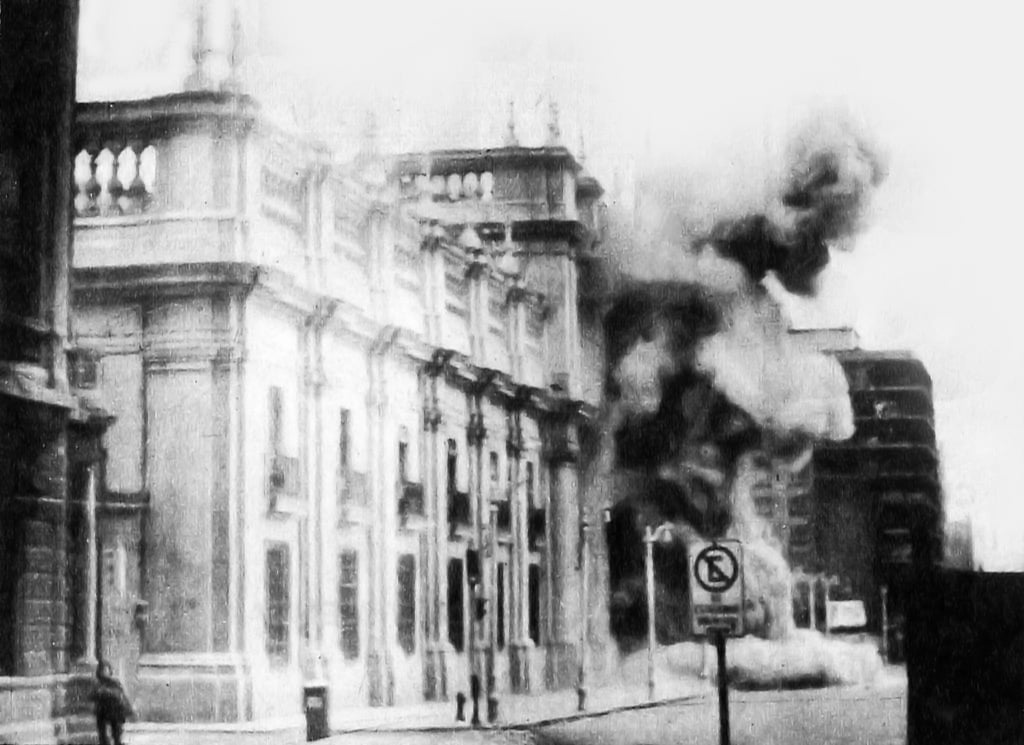
Questioned if he was “paranoid about the United States” invading Venezuela, in a 2009 interview, then-president Chávez answered: “Ask Jacobo Árbenz that question […] ask that question to João Goulart, the Brazilian, […] to Salvador Allende” — all overthrown in U.S.-backed coup d’états, followed by murderous dictatorships.
Thus, to those who support the U.S.’s illegal abduction of Maduro, and wonder with cautious optimism how this saga ends, we say: ask Latin American history that question.
Luca DeCola is a master’s student in Latin American studies at Stanford. Mikael Wolfe is an associate professor of history at Stanford