
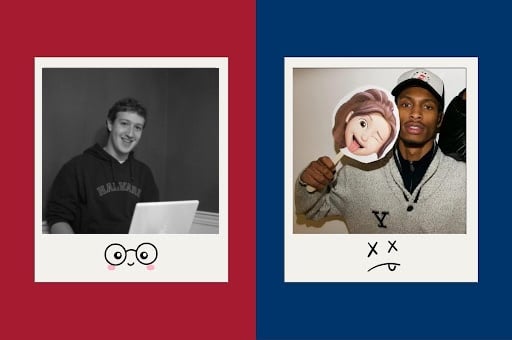
Are you a Cluely son or Series daughter? Do you prefer humble-bragging on LinkedIn or flex-tweeting on X? Did you vibe-code a tool that could disrupt an entire industry?
If you understand those buzzwords and references, you are probably deep in the trenches of Gen Z techies who are taking the world by storm with their “B2B SaaS” AI startups, unabashed self-promotion and their constant need to let others know that they are “locked in.” Unlike their predecessors, they are having fun with what they are doing and are attaining relevance much quicker.
As a generation, we take pride in not taking ourselves — or anything — too seriously. After all, we are the first generation to be so unserious that a presidential campaign used singer Charlie XCX’s “Brat” memes to get us to vote. This has become how we cope with living with unprecedented societal change.
To be unserious is to be free and truly Gen Z, or whatever a wise philosopher would have said to describe this zeitgeist. Our shared love for irony, play and nonsensical humor has seeped into all aspects of modern society, from politics to academia. Being blatantly unserious with what you do to make ends meet is not a privilege afforded to all, but those with the leeway to do so make the most of it.
Gone are the days of the nerds who dropped out of Harvard or MIT, spoke in visionary language to signal their desire to “change the world” and wore plain tops, leggings and hoodies. The tech bros and girlies of these ridiculous times are cool, witty and social media-savvy. They are thirst trappers. Baddies. Nepo babies. Meme lords. Shockingly, even jocks. They are all in the race to build the next tech company to hit unicorn status.
Stanford, an institution that has fostered student entrepreneurship for decades, is an incubator for this new generation of tech entrepreneurs who are juggling CS lectures and meetings with their roommate on how to increase the annual recurring revenue (ARR) of the AI study tool they built together. Stanford students are even the subject of memes and critiques on how their affiliation with the institution grants them instant credibility and sometimes undeserved hype in tech circles.
It is not uncommon for me to come across TikToks or Instagram Reels of a Stanford student founder who is striving to build a tech product that becomes a massive success. They try to channel their inner Steve Jobs, but if he were quirky and unapologetically Gen Z. Recently, I came across a hilarious video filmed in a Stanford dorm, shared on the profile of freshman Michael Ren ’29, joking about using a roommate’s idea to get into Y Combinator.
I cannot pinpoint exactly when this shift started. Suddenly, it felt possible to build the hottest tech product while also making cringe TikToks roasting yourself and tech culture. We collectively decided to be our most authentic and wildest selves while building — and we don’t seem to care if our potential investors deem us unserious.
Despite the sheer openness and fun, some might argue that it makes tech entrepreneurship seem like a joke. A friend recently told me, “Everyone is building something these days, and it feels like child’s play.” I agree that it seems some young people launch startups these days solely to signal ambition or just create content about it.
I am still rooting for them. I think it is great that more young people are embarking on the journey to bring their entrepreneurial visions to life. Even if I sometimes find their antics brash, I still respect the confidence of these fellow Zoomer-preneurs and their ability to remain authentic while pursuing their dreams so openly.
Jessica Cao ’26, a senior majoring in computer science at Stanford, has built an Instagram following of over thirty thousand and counting, documenting her journey as a student founder balancing academics, her personal life and building a gaming startup. While I don’t know how beneficial “building in public” can be, I believe it makes the journey more bearable and less exhausting for young entrepreneurs.
Columbia dropout and the founder of the viral startup Cluely, Roy Lee, has become a celebrity in the Gen Z tech space for his cheekiness and polarizing persona. I like that he is unafraid to speak his mind and highlight all the messy aspects of being a founder. He is often the poster boy of this trend and I believe he is playing his cards right. These days, it is almost as if you need a good dose of his approach to build something that becomes relevant.
Not every founder can afford to be “edgy.” Male tech entrepreneurs receive the largest share of venture capital (VC) funding. They are often taken more seriously by default, due in part to patriarchal assumptions about competence, whereas female-founded companies are estimated to receive less than a quarter of VC funding.
Significantly less goes to Black founders, especially Black women, who are disadvantaged because of their race, gender and other intersecting factors. Many who are a part of underrepresented communities in tech must be serious enough to get it right since the stakes are higher for them.
It is quite rare to see young Black founders getting backed so early. Sean Hargrow and Nathaneo Johnson, both Yale students and co-founders of the fast-rising AI-powered social networking platform, Series, are nothing short of inspiring to me. I believe their rise can be attributed to them being a breath of fresh air as much as to their reimagining how to connect people in this age of artificial intelligence and a looming loneliness epidemic. They have somewhat hinted at their startup as the “anti-Facebook.” This is Black excellence and we love to see it.
Honestly, I find the drama and spectacle of this corner of the internet entertaining. We are now in an attention economy. Gen Z understands that to succeed and get others to care about whatever you are working on, you must capture their attention. Hence, tech entrepreneurs are as provocative as possible to keep their names and their startups on everyone’s lips.
All this is like a reality show dished out in short form, or junk food for the brain that may lead to cognitive decline if overconsumed. Even Series launched a reality show in which they had their interns in a Hamptons house engaging in challenges while integrating AI to “enhance social dynamics.” Technocapitalism never fails to outdo itself.
I am from Lagos, Nigeria, where tech innovation is growing and startup culture is still niche. I often felt tech was not for me. I believed an artsy and deeply unserious African boy like me would not fit into this distant world of geeks who seem to have been breathing code since the womb. Now that it is all being demystified, I feel a sense of belonging because we are all trying to do something remarkable with our skills and the resources at our disposal.
Gen Z tech entrepreneurs are proving that following the old, rigid playbook is not necessary. They are blending traditional approaches with their own uniquely wild ones. At Stanford, I believe there should be support for students with unconventional approaches to tech entrepreneurship.
The “unserious” kids are here to stay and will build technologies that could transform the world. They will cook up niche memes that require “elite ball knowledge” to be understood while building the next Google. Stanford should invest in helping these student founders to succeed in an attention economy where a good product and an elite affiliation alone are no longer enough.