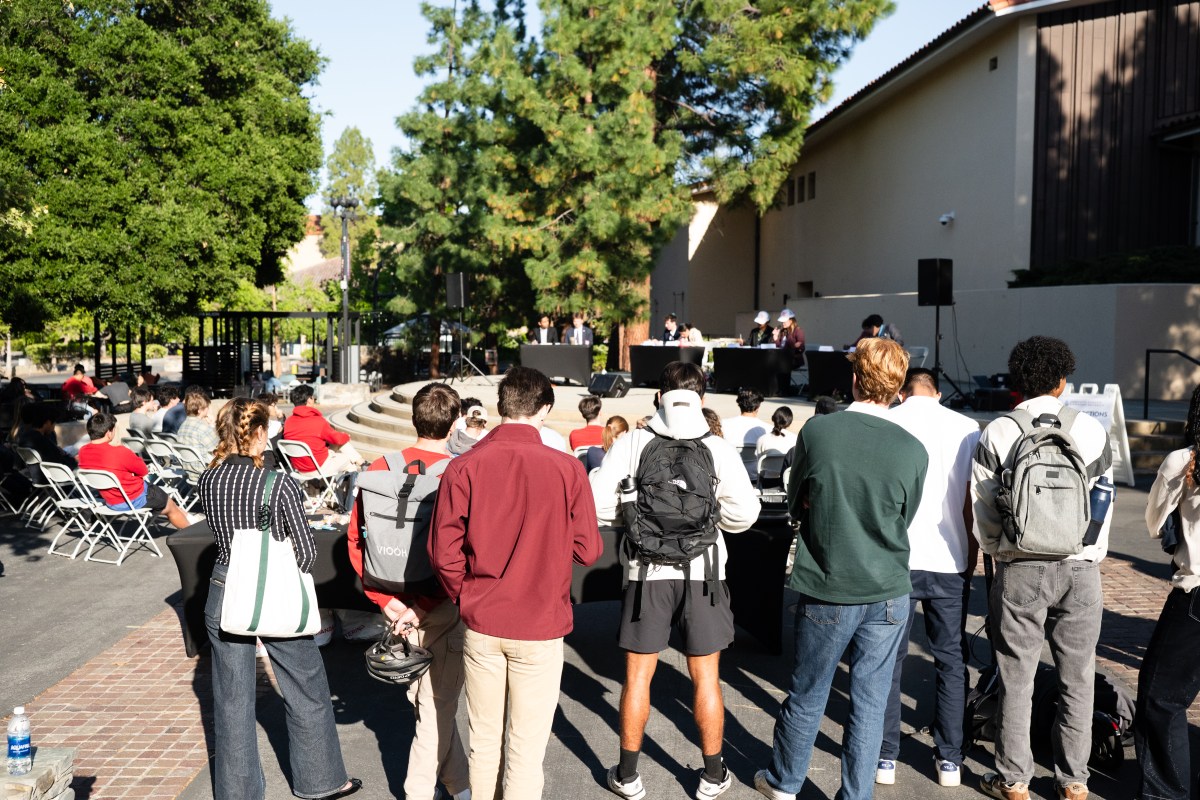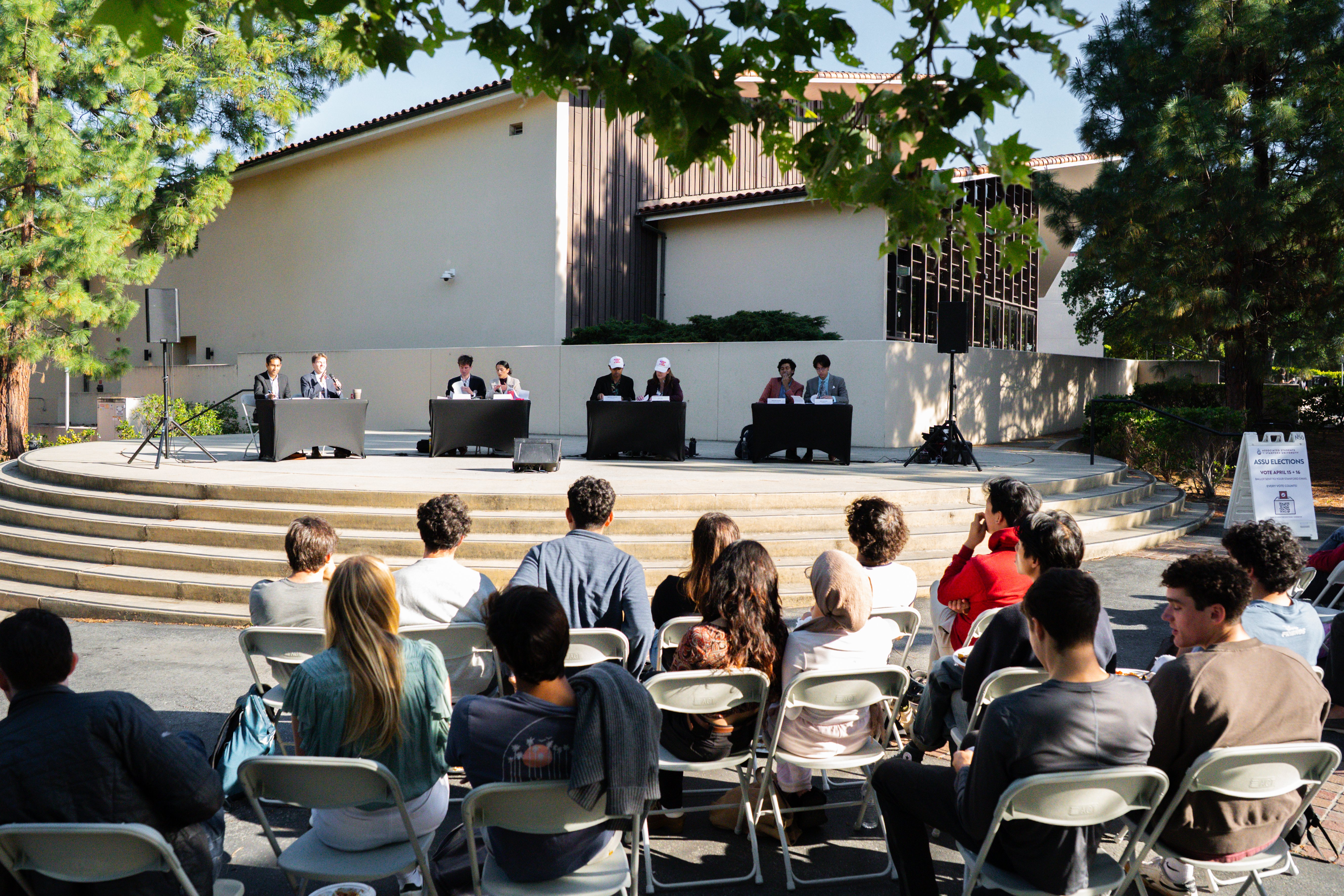
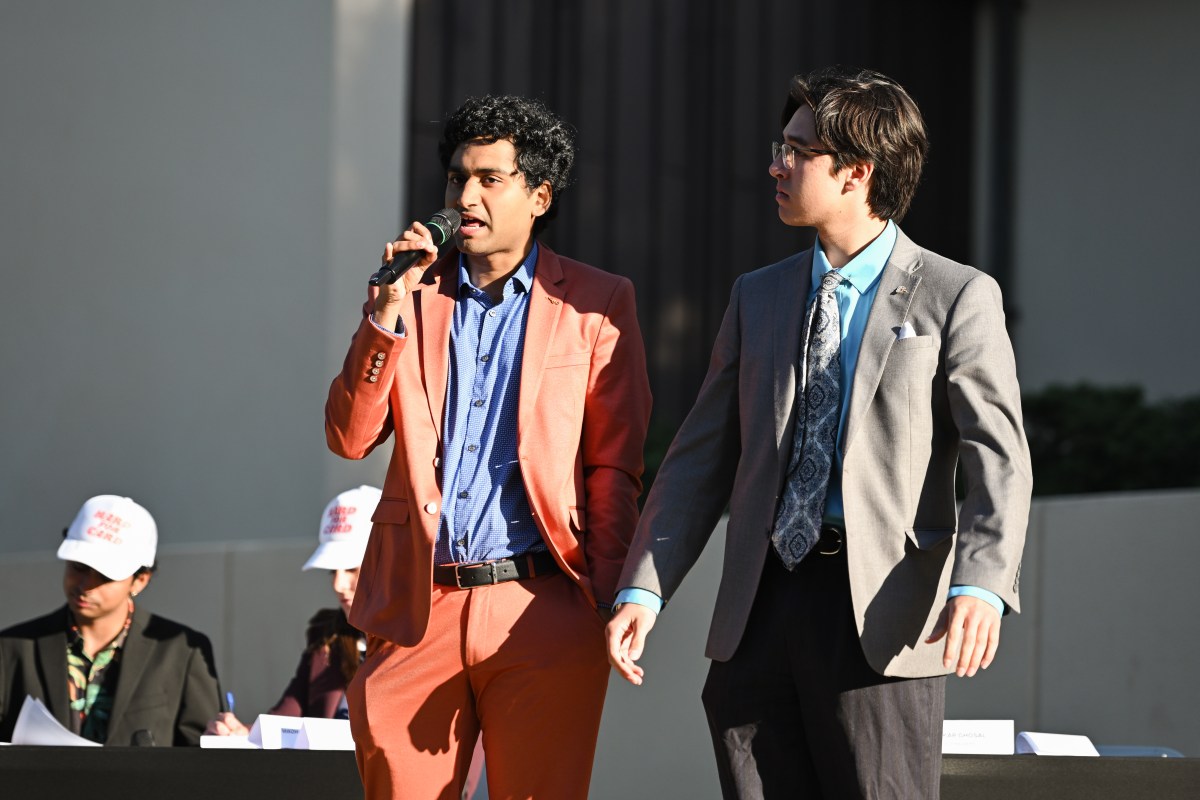
ASSU Executive candidate slates “No Brakes”, “FARM-RAISED” and “BUILT DIFFERENT” argued for their policy platforms and leadership abilities at a Tuesday debate in White Plaza that drew over 150 students.
Co-hosted by The Stanford Daily and the Associated Students of Stanford University (ASSU) Elections Commission, the debate posed questions to the candidates about how they would navigate housing policies, concerns over campus social life and advocating for student needs with the University administration. The debate was moderated by Daily news managing editor Dilan Gohill ’27 and deputy elections commissioner Charlie Schumer J.D. ’28.
Outside of sharing their goals, candidates traded occasional jabs, though the overall tenor of the debate was respectful.
“I thought the questions themselves were provocative, but not in a bad way,” Undergraduate Senate (UGS) chair David Sengthay ’26 said. “I think we should put our candidates on the spot and hear what they think about these tough questions, and if they stumble and fall that means the questions were all the better.”
The debate began with opening statements from each slate. Each candidate then responded to questions from Gohill and Schumer, including short lightning-round questions focused on the candidates’ personal qualities. The debate ended with closing remarks from each platform.
Madhav Prakash ’27 and Eva Lacy ’27 of “No Brakes” said their platform benefits from their experience working together as current junior class presidents and previously as sophomore class presidents. Their campaign has focused on improving Stanford’s campus life
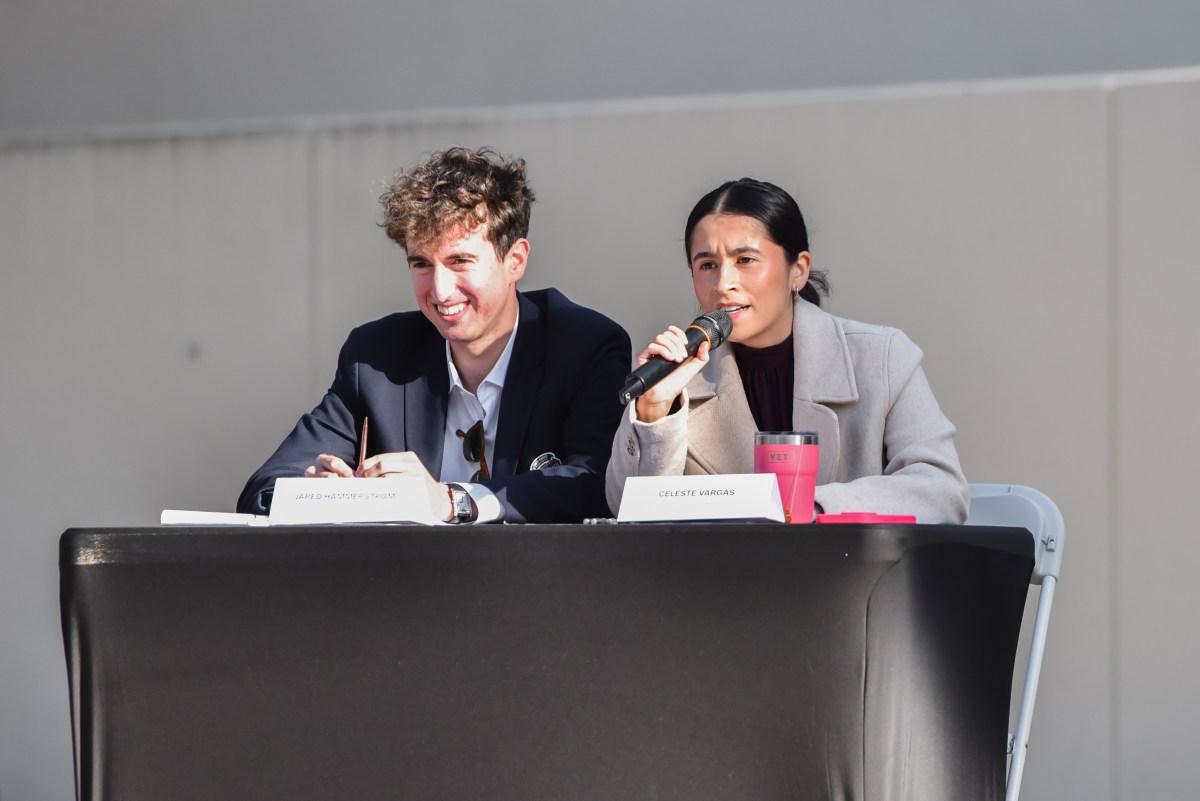
“We both will have truly no breaks for Stanford and go all the way by pouring ourselves and our energy into this institution and into all of you,” Lacy said. The pair wore matching baseball caps that read “Hard For Card.”
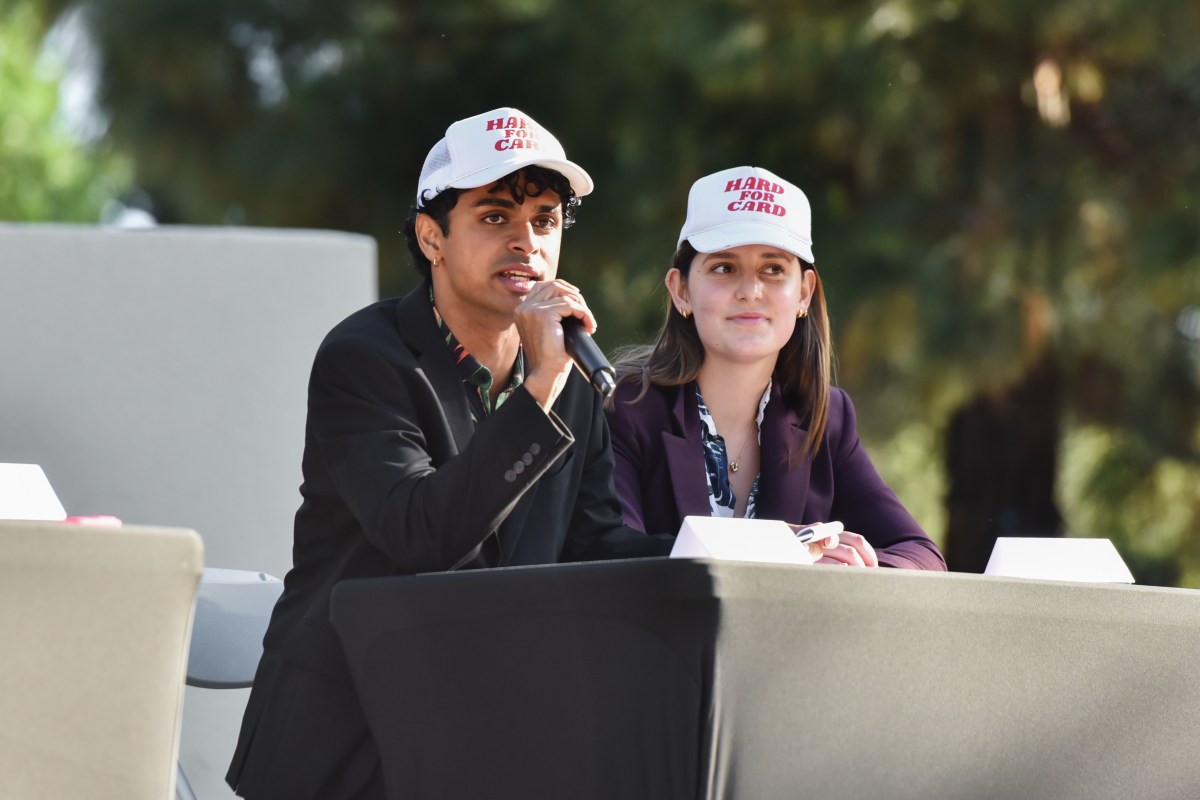
Jared Hammerstrom ’27 and Celeste Vargas ’27, who compose the “FARM-RAISED” platform, said their experience in student government provided them with an informed perspective on campus policies. Hammerstrom, currently the UGS treasurer, served as chair of the Senate’s Administration and Rules Committee last year. Vargas has served on the UGS for two years, most recently as the chair of appropriations.
“This election really isn’t about who has the best ideas. It’s about who can actually deliver for students. And that’s where really experience matters,” Hammerstrom concluded. “We don’t care about name recognition. We don’t care about putting our names on Partifuls,” he also said.
Jake Hofman ’27 and Ph.D. student Angikar Ghosal, running on the “BUILT DIFFERENT” ticket, said their backgrounds as a transfer and graduate student, respectively, offer them a platform to incorporate all voices into student policies. Hofman said his career as a magician has enabled him to engage with a wide range of community members. “I’ve had a really good, diverse experience of this campus,” he said. “We’ve got a good perspective of this campus, and we want to do our very best to serve the people here at Stanford.” Ghosal is a contributing writer to The Daily. At one point, Vargas referred to “BUILT DIFFERENT” as the “magic” ticket.
The candidates all stressed their approach to housing policies and impacts on social life if elected. Hofman and Ghosal placed importance on preventing double rooms from being converted to triples, and working toward providing students with Clipper Cards for free public transit across the Bay Area.
According to Hammerstrom and Vargas, the two helped Sigma Chi regain their house on campus. They said they aimed to help Row houses grow a strong community while gathering feedback from transfer students on housing.
Prakash and Lacy focused on increasing transparency around housing process decisions. Lacy noted her position as a resident assistant for the upcoming year while urging increased protection for cooperative houses (co-ops) and providing more Greek life housing options. Prakash suggested that Hammerstrom and Vargas copied their No Brakes’ stance on funding student-led events, joking that they were “influenced.”
Addressing a recent case of sexual assault on campus and some students feeling unsupported after reporting Title IX cases, the candidates voiced their approaches to addressing sexual violence and public safety.
“After the incident occurred, I took it upon myself to purchase pepper spray and alarms because it’s constantly something women on this campus have to think about, and it’s disgusting,” Vargas said. “We need a comprehensive four-year education on sexual assault and violence for all four years on this campus…an attack on one member of our community should be an attack on all.”
For Lacy, “Having my first Saturday back on campus have this incident was terrible, and now as I leave places at night, I make sure I’m always walking back with a friend, which is never how anyone on campus should feel.” She and Prakash stressed the importance of leveraging resources that protect students, such as education on the blue emergency phone towers across campus and increasing 5-SURE’s presence.
Hofman agreed with the other slates’ stances on sexual violence, but focused his response on the issue of school shootings and public safety more broadly. “You see tourists from all over the world come to visit this campus, and when you think about it, what if someone were to come to campus with a gun, a rifle, or an automatic? It would be terrible,” Hofman said. He and Ghosal said they hoped to increase the number of security guards at night if elected. “We want to make sure that the campus stays as safe as it can, especially on the Quad and the premises around the Oval,” Hofman said.
The moderators also asked the candidates about their approach to hate speech on campus, citing recent anti-semitic emails sent to members of Stanford’s Jewish community.
Prakash and Lacy addressed the difference between hate speech and free speech, as well as plans to foster civic discourse. “The role of the ASSU executive is to make sure we are providing platforms for students to share their words and free speech, but again, not hate speech,” Lacy said.
Ghosal said that students of all backgrounds deserve to “feel safe” on campus while still offering opportunities for speech. “There is a fine line to draw where certain forms of civil discourse and civil disagreement should be allowed,” Ghosal said, “but none of that should ever affect someone else. None of that should make someone’s life worse.”
Hammerstrom and Vargas said that all incidents of hate speech and anti-semitism be taken seriously, ensuring students don’t feel isolated or left without support. They added that they would closely follow hate speech reports if elected.
“I think it was a really spirited and fruitful debate. It was really nice to get to know each of the candidates better,” Sengthay said.
Students can now cast their vote for ASSU executive, class presidents, and UGS and graduate student council (GSC). Votes close on April 17 at 12:00 a.m.