
David Palumbo-Liu is the Louise Hewlett Nixon Professor and a professor of comparative literature.
Stephen Monismith is the Obayashi Professor in the School of Engineering and a professor of oceans.
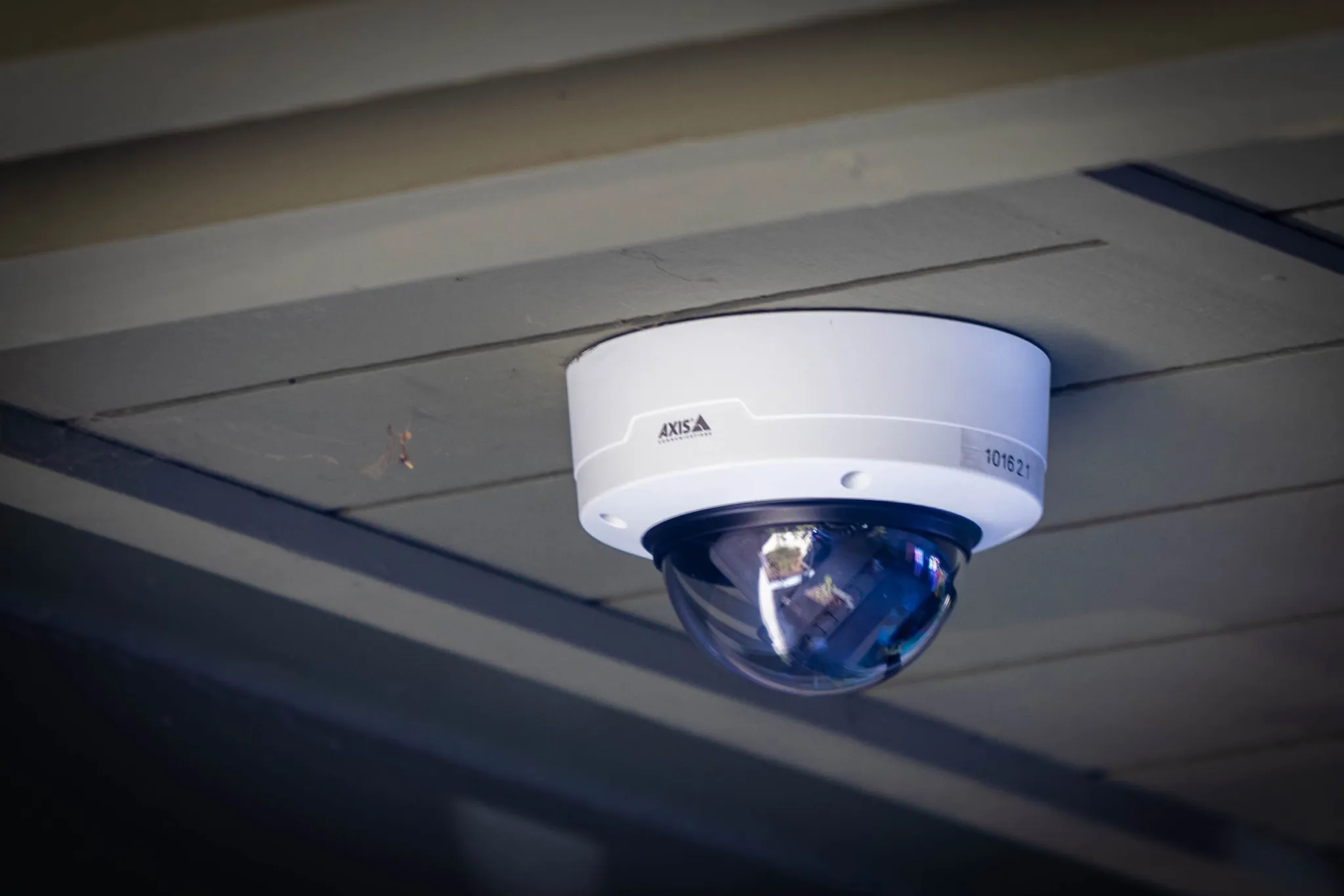
We write as concerned members of the Stanford faculty and as members of its American Association of University Professors (AAUP) chapter. We begin by echoing Tim MacKenzie’s excellent and comprehensive opinion in The Daily on the presence of Flock cameras on the Stanford campus. He writes:
ALPRs are tools of mass surveillance, indiscriminately capturing images of every vehicle that drives past them and storing the data for up to a month or more. It is equivalent to placing a GPS tracking device on each driver’s vehicle, providing time-stamped location data that can be used in warrantless searches to reconstruct your movements as you go about your lives. In California, it has been illegal to share ALPR data with out-of-state agencies since 2016. However, technology users and the companies that purvey these devices have consistently violated these policies.
Indeed, just days ago, The Palo Alto Weekly reported based on public records that “Despite local officials’ claims to the contrary, hundreds of law enforcement agencies from around the country searched data from Palo Alto’s automatic license plate reader cameras over a period of about a year.”
Fifty-seven communities have removed the cameras, including Mountain View, Los Altos Hills and Santa Cruz. Moreover, in March 2026, the Santa Clara County Board of Supervisors updated the County Surveillance Use Policy to forbid Flock as an Automated License Plate Reader vendor. Since Stanford University Department of Public Safety (SUDPS) is deputized by the County Sheriff, we are surprised at their failure to follow this policy.
Stanford’s disregard for county policy creates a fissure between the University and the community, a problem that appears time and time again in studies on Stanford’s relationship to the wider Bay Area. To establish better trust and goodwill between our campus and its neighbors, we ought to adhere to their regulations.
It is crucial to understand that threats to privacy, academic freedom and freedom of speech and assembly are taking place in the context of extraordinarily weakened and severely compromised governmental institutions. Instead of protecting us, the Department of Justice, the FBI and Homeland Security have been used by the Trump administration to go after not only protesters and dissidents but also political opponents. Undocumented immigrants and American citizens alike are being targeted, increasingly with the cooperation of state agencies.
Equally concerning is the Trump administration’s multiple attacks on universities and on education itself. The federal government continues to demand more and more student data from universities to both harass administrators and threaten the day-to-day functions of higher education.
Whatever dubious benefit these cameras add (we have yet to receive any evidence that they actually make us safer), it cannot outweigh these threats and the chilling effect they have on campus. It would be a terrible mistake to shrug off this issue and to normalize massive surveillance of our campus and, for many of us, our homes.
On its website, Flock states that it has a presence on over 390 K-12 schools and higher ed campuses. Protests from students, faculty and community members have mounted against Flock at the University of Wisconsin, Penn State, the University of Arizona, Emory University and Cornell.
“[The Flock cameras are] really a big threat at Cornell because we have a lot of people on visas, we have a lot of protesting and a lot of civil disobedience going on here,” one student told The Cornell Daily Sun. “We’ve also seen our presidential administration targeting our university, which nationally and federally, is where [Immigrations and Customs Enforcement] is looking for people.”
Flock argues that “ICE does not have direct access to Flock cameras, systems or data, unless the agencies that control their data expressly and deliberately allow it”. But as the Palo Alto Weekly story illustrates, the system is extremely porous. ICE can easily gain indirect access to data and the cameras can be hacked with ease.
The stifling of civil disobedience is a significant problem at institutions that claim to honor freedom of speech and academic freedom. Flock further disrupts campus life by accentuating the differences in job and residential security between faculty with or without tenure and students with or without citizenship. Certain campus events and lectures will be less attended, and full participation in campus life will be impossible.
As an institution of higher education, Stanford has a special obligation to protect privacy. Rights to privacy are intimately connected to academic freedom and freedom of speech. Because local policy does not safeguard surveillance data, people, especially international scholars, students and staff, may well curtail their participation in university life and scholarship. This chilling effect created by unregulated 24/7 Flock mass surveillance on campus is absolutely anathema to the free and open exchange of ideas and participation in events and assemblies.
Since its founding, Stanford has committed itself to its motto: “Die Luft Der Frieheit Weht” (The Wind of Freedom Blows). Stanford must immediately cover the Flock cameras, cancel the contract with Flock and commit to caring for community safety by establishing limits on surveillance. Any data access must require a valid judicial warrant. There should be no use of facial recognition or biometric analysis. There can be no aggregation of data into a regional, statewide or national system. A petition is being circulated among past and present members of the Stanford community advocating for these demands.
Only by doing these things can we live up to our founding commitment to freedom.
The American Association of University Professors (AAUP), founded in 1915, is an association of faculty and other academic professionals based in Washington, D.C. with chapters at colleges and universities across the country devoted to promoting academic freedom. The Stanford chapter of the AAUP includes faculty and teaching staff from all seven schools at Stanford. Its members hold a range of opinions on most topics but are staunchly united in defense of the ability to teach, learn and conduct research and scholarship freely. In this column, members speak for themselves, addressing topics of urgent concern relating to academic freedom.