
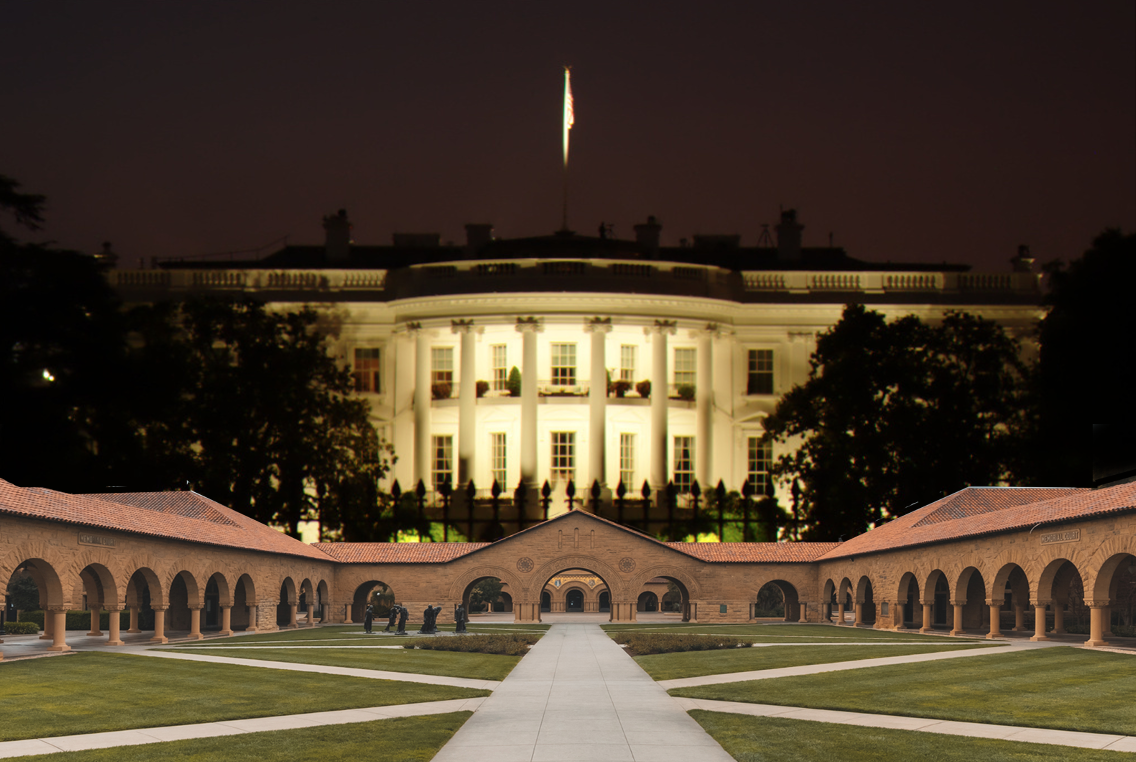
Since the beginning of the second Trump administration, numerous Stanford affiliates have entered the national spotlight for their roles in the federal government. Their influence has disproportionately shaped foreign policy and public health institutions. The Daily identified six notable figures who link the Farm to the White House.
Jay Bhattacharya

Former Stanford Medical School professor Jay Bhattacharya B.A. ’89 M.A. ’90 M.D. ’97 Ph.D. ’00 was confirmed as National Institutes of Health (NIH) director on March 25, 2025. As of Feb. 18, Bhattacharya has served as the acting director of the Centers for Disease Control and Prevention (CDC). Bhattacharya is the first to have held the two leadership positions simultaneously.
U.S. President Donald Trump tapped Bhattacharya for the CDC directorship as a replacement for Jim O’Neill, who left his position as deputy health secretary in the Department of Health and Human Services (HHS) to accept Trump’s nomination to lead the National Science Foundation. O’Neill had served as acting CDC director since August 2025, when Health Secretary Robert F. Kennedy, Jr. dismissed Senate-confirmed director Susan Monarez due to an alleged dispute over vaccine policy.
Bhattacharya has recently drawn criticism from experts, who claim the CDC did not act quickly enough to curb a recent hantavirus outbreak. The disease has spread over the last several weeks on a cruise ship near the Canary Islands, killing three passengers. Seven American passengers have returned to the U.S., and the remaining 17 will be flown to the National Quarantine Unit in Omaha, Nebraska. A team of U.S. health officials will arrive in the Canary Islands on Sunday to meet the ship.
Experts have expressed concerns that Bhattacharya will align with Kennedy on public health policy — namely, vaccine restrictions. On April 9, Bhattacharya delayed publication of a report that showed COVID-19 vaccines reduced the likelihood of hospitalization among healthy adults. The article was to be published in the Morbidity and Mortality Weekly Report (MMWR), a CDC newsletter that conveys public health data. The MMWR rejected the report on April 22, eliciting allegations that Bhattacharya is downplaying the benefits of vaccines to align with Kennedy, who is an outspoken critic of such immunizations.
A few weeks prior, Bhattacharya opposed Kennedy and the HHS at a CDC staff meeting, claiming that it is “vital” for children to be vaccinated against measles. Kennedy has attempted, though unsuccessfully, to scale back childhood vaccination requirements during his time as health secretary.
Bhattacharya attained public attention during the COVID-19 pandemic for co-authoring the “Great Barrington Declaration” (GBD). The document expressed opposition to lockdowns, mask-wearing and other public health measures implemented to reduce the virus’s spread, raising criticism from public health experts. Bhattacharya alleged that Stanford attempted to “deplatform” him after the GBD’s publication, claiming the University violated academic freedom by denying him an opportunity to present his views on campus.
On April 16, Trump nominated Erica Schwartz, a former military doctor and the deputy surgeon general during Trump’s first term, to serve as the CDC’s next director. Bhattacharya will continue to serve as acting director while Schwartz awaits Senate confirmation.
Jeremy Carl
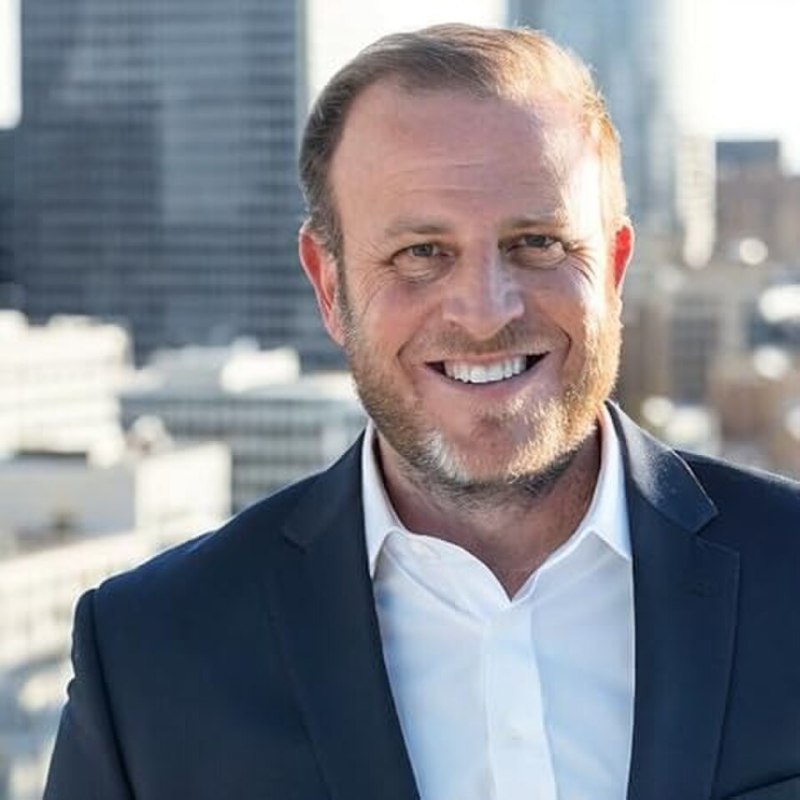
A research fellow at the Hoover Institution focused on energy security and climate policy, Jeremy Carl served as deputy assistant secretary of the interior during the first Trump administration. Trump nominated Carl to be the assistant secretary of state for international organization affairs in June, but Carl withdrew his candidacy on March 10 after facing criticism for his comments on race relations.
In a Feb. 13 senate hearing, Carl claimed that the “erasure” of America’s white culture is weakening the country. Carl’s statements align with the ideology of “national conservatism,” of which he has been a longtime proponent, and drew bipartisan opposition following the hearing. In 2024, Carl published a book entitled “The Unprotected Class: How Anti-White Racism Is Tearing America Apart,” which espouses these views.
In an article in “The Spectator,” Carl characterized the hearing as “theatrical,” claiming that those questioning him during the hearing aimed to “take away [his] identity and sense of self.” The NAACP and the National Urban League, among other prominent civil rights groups, have expressed opposition to Carl’s nomination.
“Mr. Carl is underqualified and has an “anti-Black ideology,” the Congressional Black Caucus wrote in a statement. “Beyond his troubling remarks on civil rights, his commitment to denigrating Black history deeply concerns our Caucus.”
During the hearing, Sen. Jacky Rosen, D.-Nev. and Sen. Jeanne Shaheen, D.-N.H. questioned Carl about a 2024 podcast appearance in which he allegedly said “Jews have often loved to play the victim.” Carl reportedly agreed with the host when he criticized Jewish people for claiming “special victim status” after the Holocaust and stated that “Hitler is always the convenient kind of bad example.”
“I made some comments in interviews about minimizing the effect of the Holocaust that were absolutely wrong. And I am not going to sit here and defend them here,” Carl said during the hearing.
In addition to his research with the Hoover Institution, Carl currently focuses on immigration, multiculturalism and nationalism as a senior fellow at the Claremont Institute, a conservative think tank.
Kevin Warsh
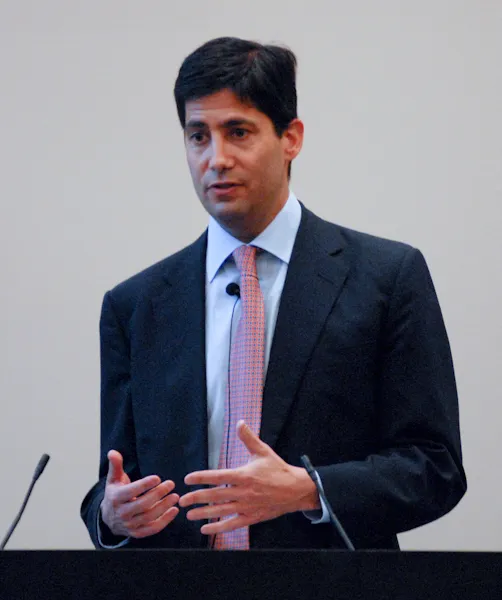
Trump nominated Kevin Warsh ’92, a fellow at the Hoover Institution and the Dean’s Visiting Scholar at the Graduate School of Business (GSB), to serve as the next chair of the Federal Reserve on Jan. 30. Since his nomination was cleared by the Senate Banking Committee on April 29, Warsh’s nomination will soon move to the full chamber for confirmation in a final vote.
Warsh was vice president and executive at Morgan Stanley & Co. before becoming a member of the Board of Governors of the Federal Reserve System under the Bush administration. He served on the Board from 2006 to 2011.
Warsh’s nomination comes amid conflict between the Trump administration and current Fed chair Jerome Powell, whose term is set to end May 15. On April 24, the Department of Justice dropped a months-long investigation to determine whether Powell lied to Congress about the cost of renovations to the Fed’s headquarters. When the investigation was announced in January, Powell claimed that its real aim was to pressure the Fed into lowering interest rates — a move that Powell opposes.
Warsh has repeatedly criticized the Fed, blaming it for inflation and higher costs of living. In an April 21 Senate hearing, Warsh stated his intention to “reform” the Fed — an initiative that would include lowering interest rates and reducing the Fed’s independence from the federal government.
“Congress tasked the Fed with the mission to ensure price stability, without excuse or equivocation, argument or anguish,” Warsh said during the hearing. “Inflation is a choice, and the Fed must take responsibility for it. Low inflation is the Fed’s plot armor.”
Casey Means and Calley Means
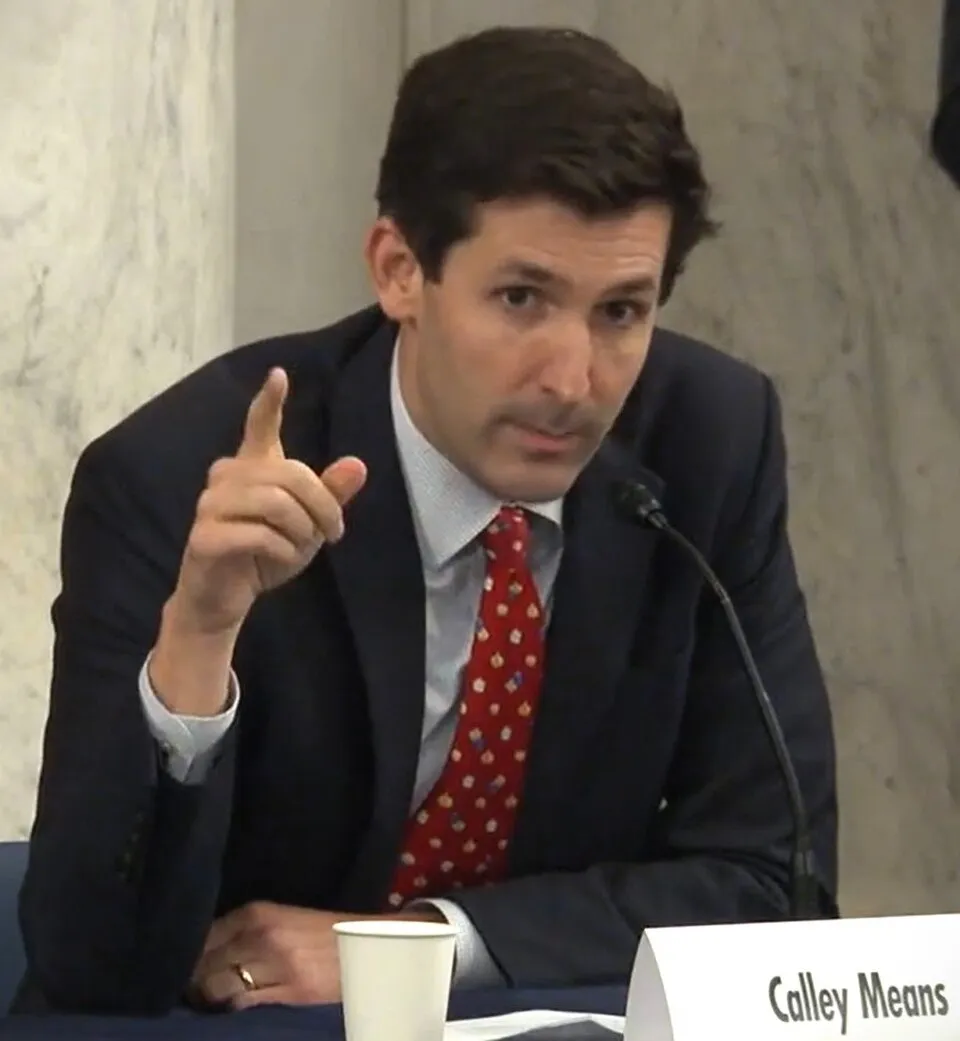
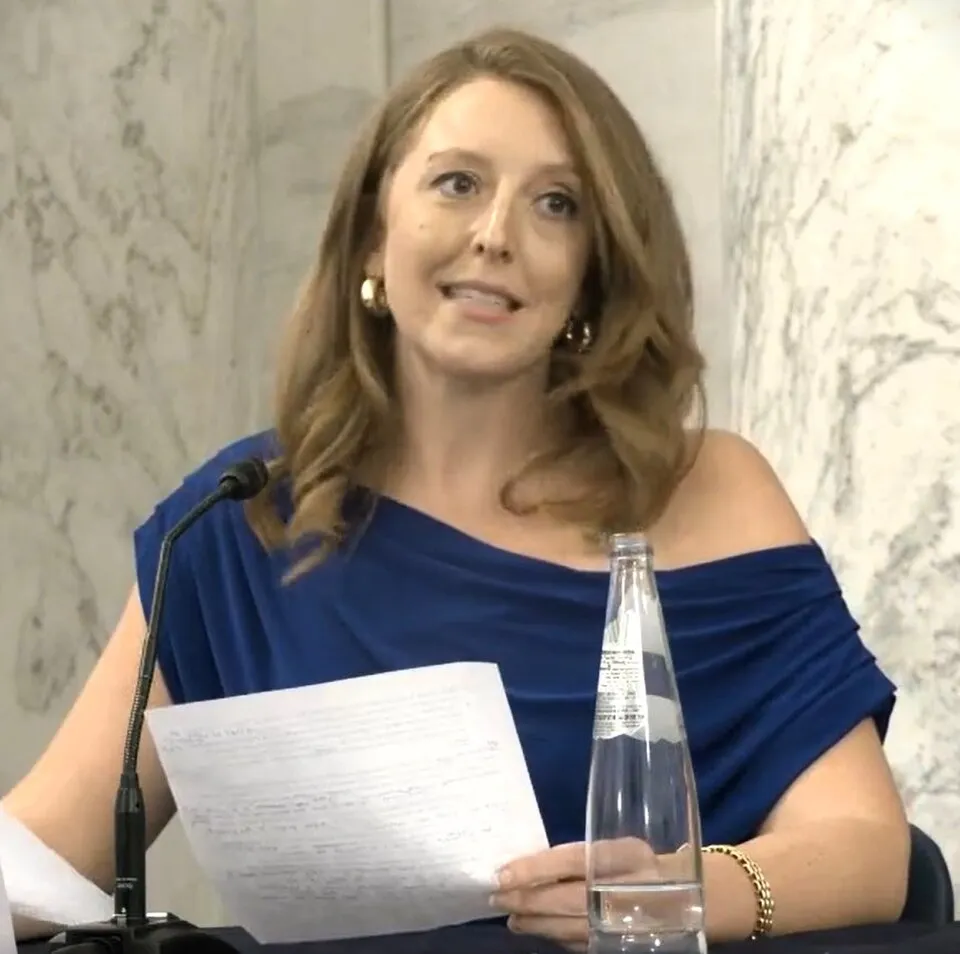
Casey Means ’09 M.D. ’14 and Calley Means ’08 have aligned themselves with the Trump administration’s health department. Both have been nominated for different positions within the current government and have become prominent voices within the Make America Healthy Again (MAHA) movement.
U.S. President Donald Trump nominated Casey Means for surgeon general after she was recommended for the role by Kennedy. Trump withdrew her nomination on April 30 after her confirmation was stalled in Congress over her unconventional approach to medicine and her views on vaccines that caused hesitancy.
While Casey Means finished her medical degree at Stanford, she dropped out of her residency program at Oregon Health and Science University because she came to see the healthcare system as exploitative. “It’s not an overstatement to say that I learned virtually nothing at Stanford Medical School about the tens of thousands of scientific papers that elucidate these root causes of why American health is plummeting,” Casey Means said in an interview with PBS.
Casey Means has placed herself as a supporter of the Trump Administration’s MAHA movement, with Trump calling her a “MAHA Warrior” and Kennedy praising her book “Good Energy,” which she wrote with Calley Means, as “a bible for the MAHA movement.”
After her nomination, Casey Means’s confirmation stalled in Congress, facing hesitation from members of both parties. She has been a vocal critic of the conventional medical system and has been a prominent supporter of controversial health claims, such as the benefits of drinking raw milk and her skepticism towards vaccines and their potential links to autism. She titled one of her chapters in her book “Trust Yourself, Not Your Doctor.”
Congress also stalled Casey Means’s appointment to surgeon general because of her financial ties to certain wellness companies that she promotes as an influencer, which she sometimes failed to disclose.
Trump has now appointed Nicole Saphier as surgeon general, his third nomination for the position.
Calley Means has also become a supporter of the MAHA movement, now serving as Kennedy’s senior advisor. He is a vocal supporter of Kennedy’s health agenda and coordinated government reports on the Trump administration’s health policy.
While Means doesn’t have any formal medical training, he emphasized his personal background as a consultant and lobbyist for brands like Coca-Cola and others within the pharmaceutical industry. He also pulled from his experience as the co-founder of Truemed, which helps people use some of their savings towards health products, such as supplements, weights and saunas.
However, some of Means’s former colleagues disputed his assertions regarding his work as a lobbyist and with Truemed, claiming he embellished upon his experience. When Means worked for firms Mercury Public Affairs from 2009 to 2011 and Edelman from 2011 to 2013, neither represented Coca-Cola. Speculations also arose that Truemed benefits from Means’s push to reroute the medical system. In a recent Congressional hearing, Means faced scrutiny because he held between $25 million and $50 million in stock in the company and served as its president, constituting a potential conflict of interest. When he officially joined the Trump Administration in November, Means resigned from his position at Truemed and divested his holdings, noting that “the decision to support the Trump administration’s efforts to reverse childhood chronic disease is the best professional decision of [his] life.”
Like his sister, Calley Means is a critic of the mainstream healthcare system, claiming it seeks to profit by putting the public on a prescription “treadmill” instead of promoting diet and exercise. He also claimed in an X post that COVID-19 vaccine mandates “are a war crime, particularly for kids.”
The pair have appeared together on podcasts with Joe Rogan and Tucker Carlson and have amassed over 1 million followers on Instagram and 500,000 on Twitter, collectively.
Condoleezza Rice
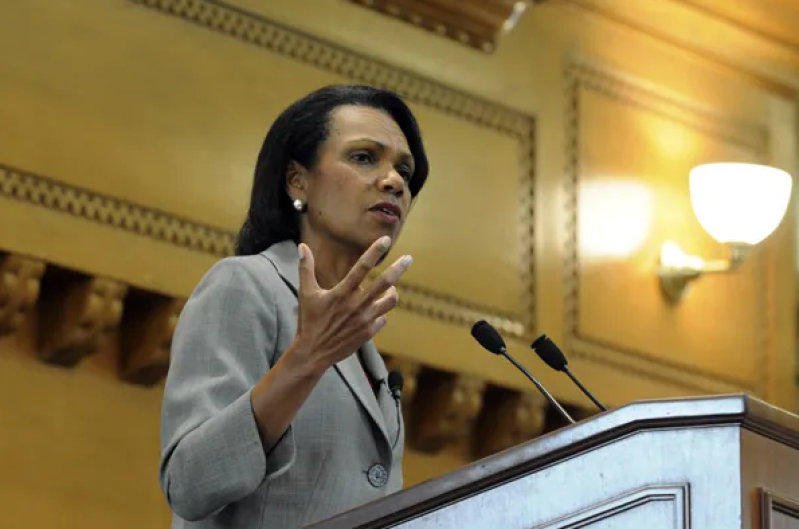
Political science professor and Hoover Institution director Condoleezza Rice has held roles in the federal government since 1986, earning a reputation as a staunch conservative.
Rice was appointed special assistant to the Director of the Joint Chiefs of Staff under the Reagan administration in 1986. From 1989 to 1991, Rice served as the special assistant to former President George H.W. Bush, and became the first woman to serve as national security adviser under former President George W. Bush. She was the first African-American woman to be Secretary of State — a position she held from 2005 to 2009, when she returned to Stanford.
Recently, Rice has advocated aggressive military action against Iran, expressing her support for Trump’s “Operation Epic Fury.” The stated aim of the joint U.S.-Israeli operation is to destroy Iranian offensive missiles, means of missile production and security infrastructure to destabilize the country’s fighting capabilities.
In a March interview on Fox News, Rice called on Trump to “finish Iran’s military.” She expressed similar views in a March 12 talk at the Hoover Institution, pushing for the “neutering of Iran as a conventional military threat.”
Rice publicly expressed her support for Trump in a Facebook post following his victory in the 2024 presidential election. “My prayers are with President Trump as he takes on the responsibility and the opportunity to lead the greatest democracy on the face of the earth and to defend and promote our interests and our values across the world,” she wrote.
During a March 6 White House visit, Rice attended a college sports roundtable during which Trump lauded her as “a woman who’s really respected.”
This story has been updated to include more information regarding Calley Means’s previous employment.