
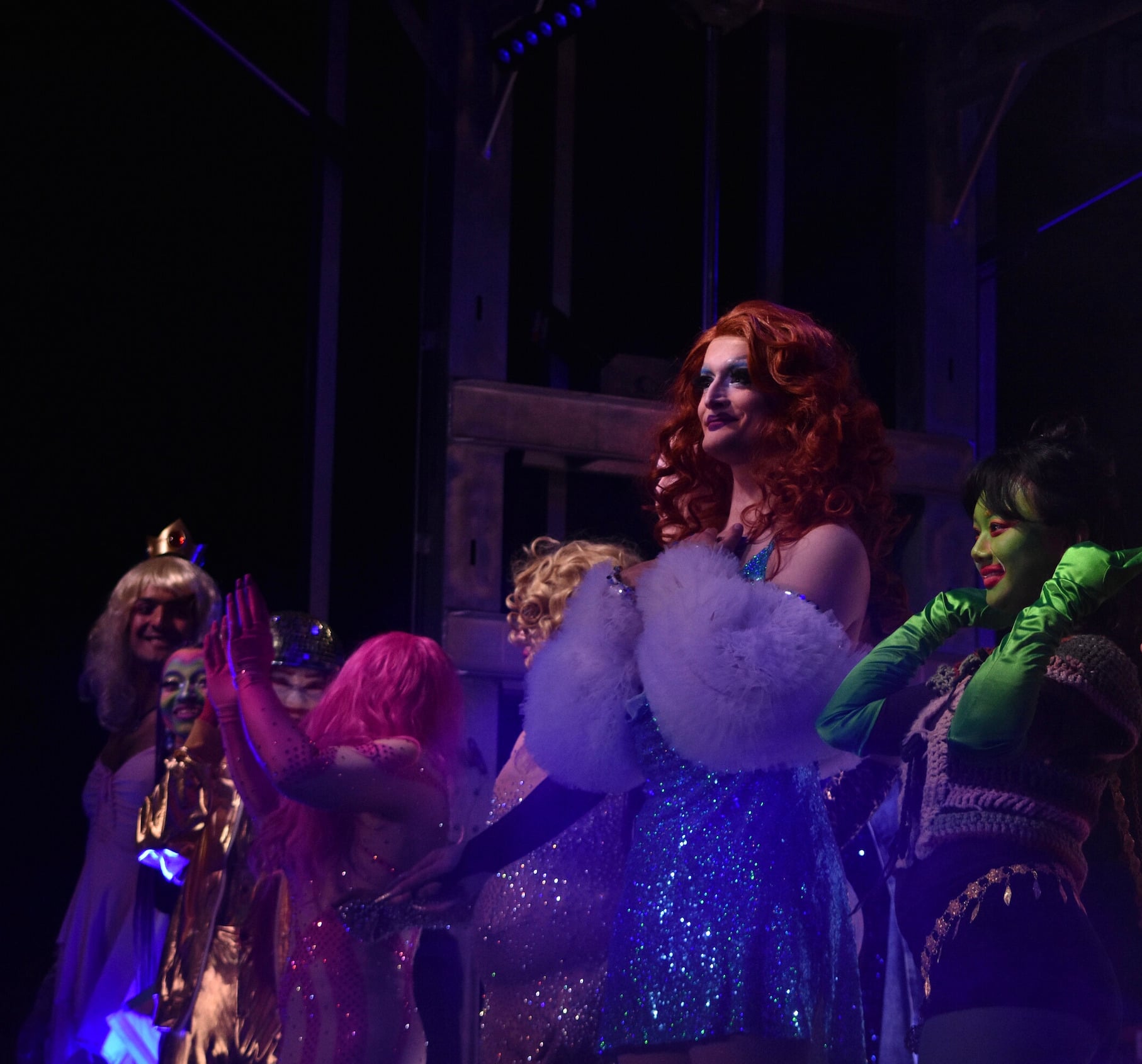
Will Jepsen ‘28 is the financial officer of Stanford Drag Troupe and co-organizer of DragFest. Arin Iverson ‘27 is the president of Stanford Drag Troupe and lead organizer of DragFest.
DragFest is happening on Friday. It shouldn’t be.
DragFest — an annual, free-to-attend production that has brought former winners of RuPaul’s Drag Race to the Farm — has been hosted collaboratively by Stanford Drag Troupe (SDT) and the former neighborhood Hyperion for the past four years. The sunsetting of the neighborhood system brought an abrupt end to this partnership, forcing an event that draws over 1,000 attendees annually to face its own extinction.
In past years, Hyperion poured over $100,000 into the event. Their endowment paid for the stage, the lights, the sound, the headlining performers and much more. Without their backing, the prospect of DragFest ‘26 looked more like a desperate, drag-on-a-dime fundraiser than the glamorous gathering of the past four years.
Beyond funding, the neighborhood system and all neighborhood events relied on program directors and staff to orchestrate logistic elements like fee negotiations and day-of planning. The system’s dissolution meant the loss of these trained professionals, each paid to work on DragFest, meaning that no one was contracted to make the event happen. The evaporation of this crucial support sank the reality of DragFest ‘26 ever-deeper into the sea.
To add insult to an already terminal injury, the SDT leadership failed to complete the ‘25/’26 Annual Grant application process, leaving them with $0 in funding from the ASSU to begin the year. Without an annual grant allotment — which was never intended to fund DragFest in the first place — the troupe looked unlikely to be able to put on their already cost-effective quarterly shows, let alone an event to match the caliber of DragFests past.
A single glimpse of hope in the deep sea, a meager (yet, delightful) $3,000 in mysterious rollover funds offered SDT a lifeline — a start.
From here, the task became clear. The SDT board, floating on a hole-ridden dinghy in the middle of the Pacific, was only beginning to look as the tsunami appeared overhead. Eight full time students. A built-in deficit of 100,000 dollars. Zero experience in campus-wide festival organizing. Surely they would drown.
Now, crucially, were they to drown, drag at Stanford — its prominence and its relevance — would never be the same. Drag is a flamboyant, grandiose display of subversive gender performance, picking at the seams of the social constructs that queerness fundamentally contradicts.
Drag performance preaches blatant transgression of these constructs, an act inextricable from queer existence. The very possibility of a man standing on stage with a full face of makeup and a wig glued to his head is a testament to the LGBTQ+ community’s individual power to choose our own lives. Drag offers us — queers and non-queers alike — a chance to reject the demands of social confines. Drag offers us a chance to be free.
Within a national political agenda increasingly devoted to stripping that freedom of expression and criminalizing transness and drag, events like DragFest matter all the more. Drag’s movement from the backrooms of dimly lit clubs to open-air, spotlight-spattered stages means something. It reflects the work of generations who struggled for queer visibility; even if just for a moment, it moves queerness from margin to center.
In funding DragFest, Stanford promoted that visibility. Drawing an audience from all corners, DragFest wasn’t a niche, alternative celebration but a campus-wide opportunity for defying what society makes of us. In abandoning DragFest, they forsake that progress — they forsake their students. Losing DragFest means losing campus’ greatest moment of queer joy, a moment in which many of us catch a glimpse of true, jubilant freedom. So, for SDT, drowning was simply not an option.
The unbridled audacity of eight students was all that DragFest ‘26 had. Eight of us — now de facto professional event planners — learned to submit work orders, book audio-visual production (with the support of Arbor Live), negotiate with the agents of world-famous performers and curate each decorative detail down to the color of chalk on each block of sidewalk.
Intensive as it was, this work relied on the support of the student body, campus offices and the immense generosity of total strangers. DragFest would not be here now, and will not be here in the future, without them — without you. We, a community of students, alumni, staff and instructors have come together to make DragFest a reality. Three individuals alone donated $40,000, a petition to save DragFest was signed by 572 people and dozens of us will be on the ground Friday bringing DragFest to life. The actions of the Stanford community clearly demonstrate the irreplaceable value of DragFest.
That being said, the work done this year is wholly unsustainable. Without the resolve, commitment and incomprehensible dedication of the captain of SDT’s humble dinghy, DragFest’s extinction would most certainly be upon us. DragFest deserves protection. It deserves a shepherding that does not demand unfathomable effort from its students; it deserves our funding, our care, our attention.
SDT begins next year with $40,000 allocated to DragFest (half the cost of this year’s production, and a sliver of the budget that once was). The tsunami — though smaller than this year’s — begins to emerge once again. And surely it will, year after year, hurl towards us with all its might. But we, as members of that big beautiful queer culture that Stanford has offer if you work to find it, know that the waves will be met every time. For as long as queer people exist on this campus, DragFest will go on.
DragFest: Resurfaced will be on Friday, May 15th, 2026 at Terman Fountain.