
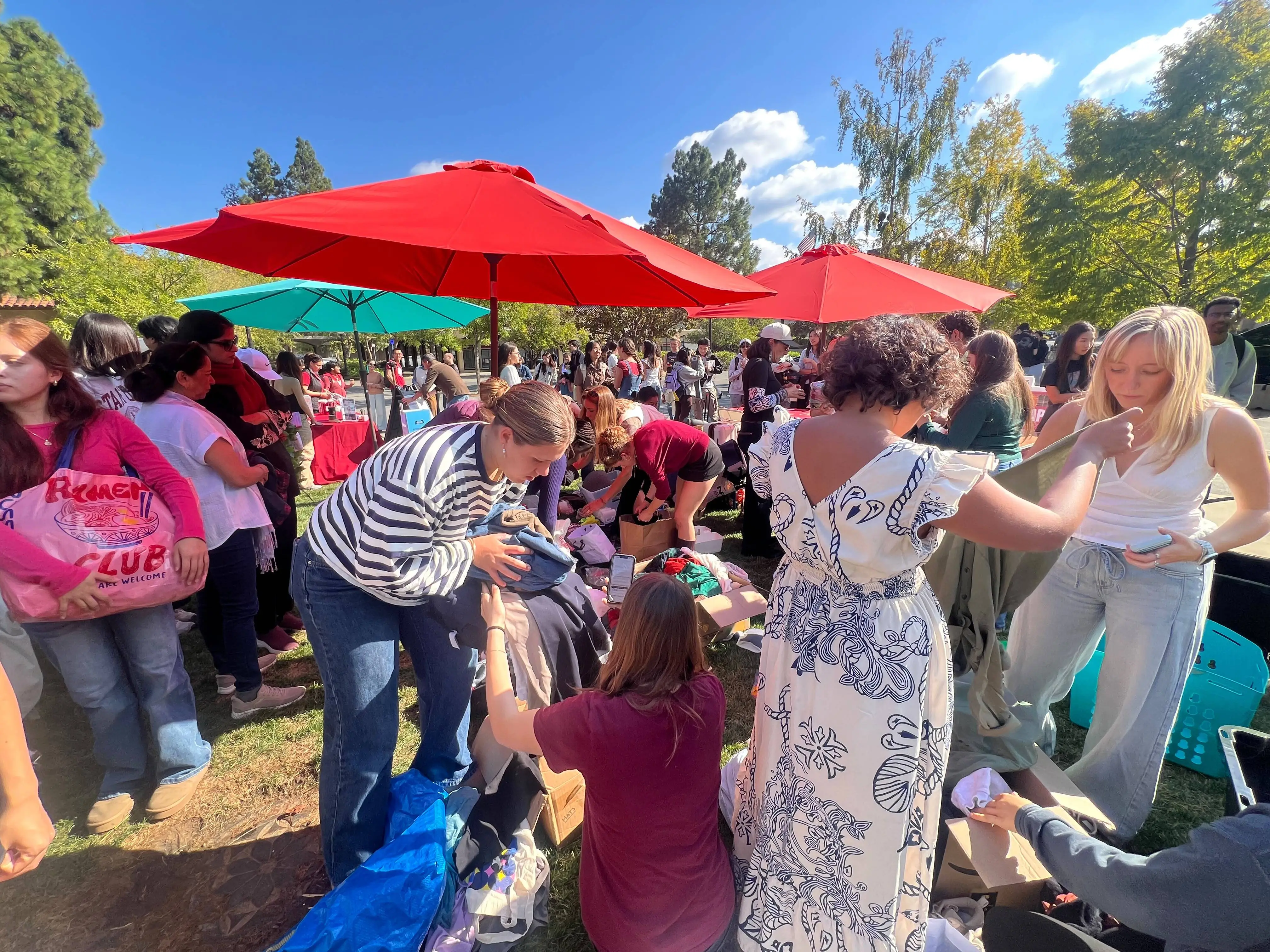
Stanford’s third annual Climate Week packed over 70 events into seven days, from a panel on financing renewable energy to an art gala built around climate. According to organizers, the goal was to give every student a way into the climate space, regardless of their major.
Spanning Oct. 19 through Oct. 25, Climate Week bridged the different academic communities on campus, from business and tech to law and the arts. Student organizations collaborated to introduce participants to different areas of climate work, and discussions about opportunities in climate continued over networking events. Other events such as Eco-Gala and Big Swap encouraged students to live more sustainably through interactive art exhibits and upcycling workshops.
Organizers brought in keynote speakers like Tom Steyer, a climate investor and former gubernatorial candidate, and Ani Dasgupta, president and CEO of the World Resources Institute. The Clean Tech Hackathon and 90 Minutes to Moonshot events encouraged participants to build and collaborate in solutions to current climate problems.
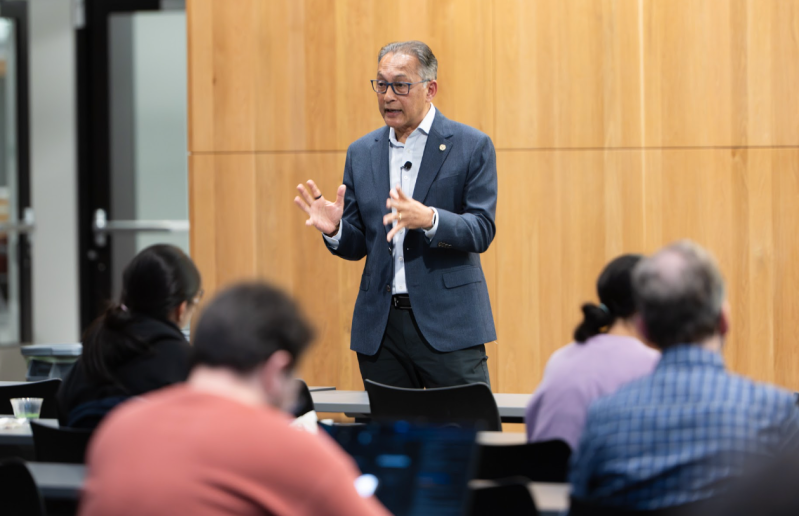
Ani Dasgupta, President and CEO of the World Resources Institute, delivers keynote speech (Cayden Gu / The Stanford Daily).
A primary goal this year was to give all Stanford students, regardless of their academic interests, the opportunity to host an event related to climate, said co-executive directors Edward Chen ’28 and Danica Sun ’28. “Whether it’s economics, finance, the policy side of things, engineering, technology, there’s a place for [everyone] here,” said Chen. “It’s a big misconception that you have to be a big politician or a big businessman to make an impact on something such as climate,” Sun added. “There are so many opportunities out there that many people just don’t even know about.”
Showing students those opportunities was a priority for Anushka Godambe ’28, co-vice president of alumni relations with Eyrin Kim ’27. Her team connected successful alumni with current students, outlining different pathways for students to continue working on climate issues after graduation.
Pulling off a week this size took a multitude of hands on deck and three quarters of preparation. The extensive planning reflects the week’s growing size, as the first Climate Week in April 2025 was run by six students who started planning about a month before the week, according to Sun. The organizing team grew to 30 the following year, and this year had around 70 people helping out. Planning for Climate Week this year started in December 2025 — about nine months before the week itself.
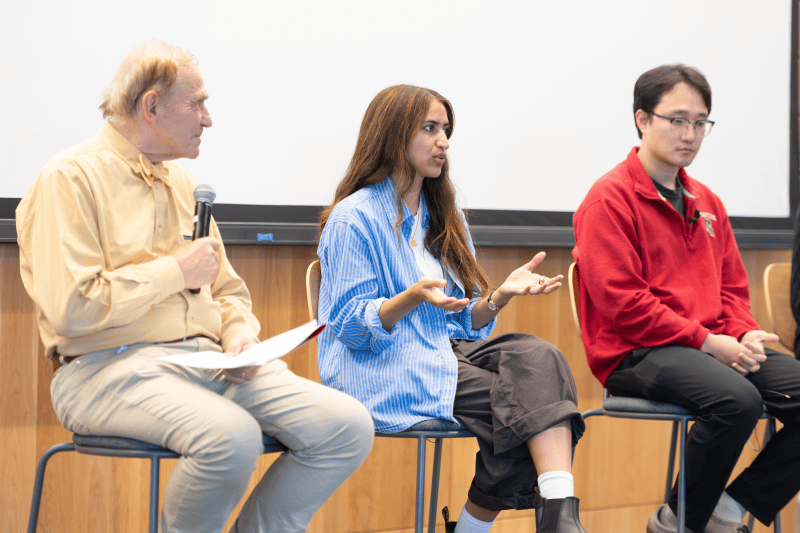
Dr. Piotr Moncarz, Smita Satiani, and Dr. Taeho Kim discuss the future of geothermal energy at a fireside chat (Cayden Gu / The Stanford Daily)
In previous years, the events took place in spring, but the 2026 event was purposefully planned for fall in order to catch the start of the school year. Wong, who joined the organizing team the summer before his freshman year, said much of the traction around climate week comes from freshmen. He emphasized the importance of having the event at the beginning of the school year when people are “buzzing with all these ideas.”
The week matters because people working on climate at Stanford often stay in their own silos, Wong said. Without Climate Week, “you would have more of a fragmented climate ecosystem,” he said.