
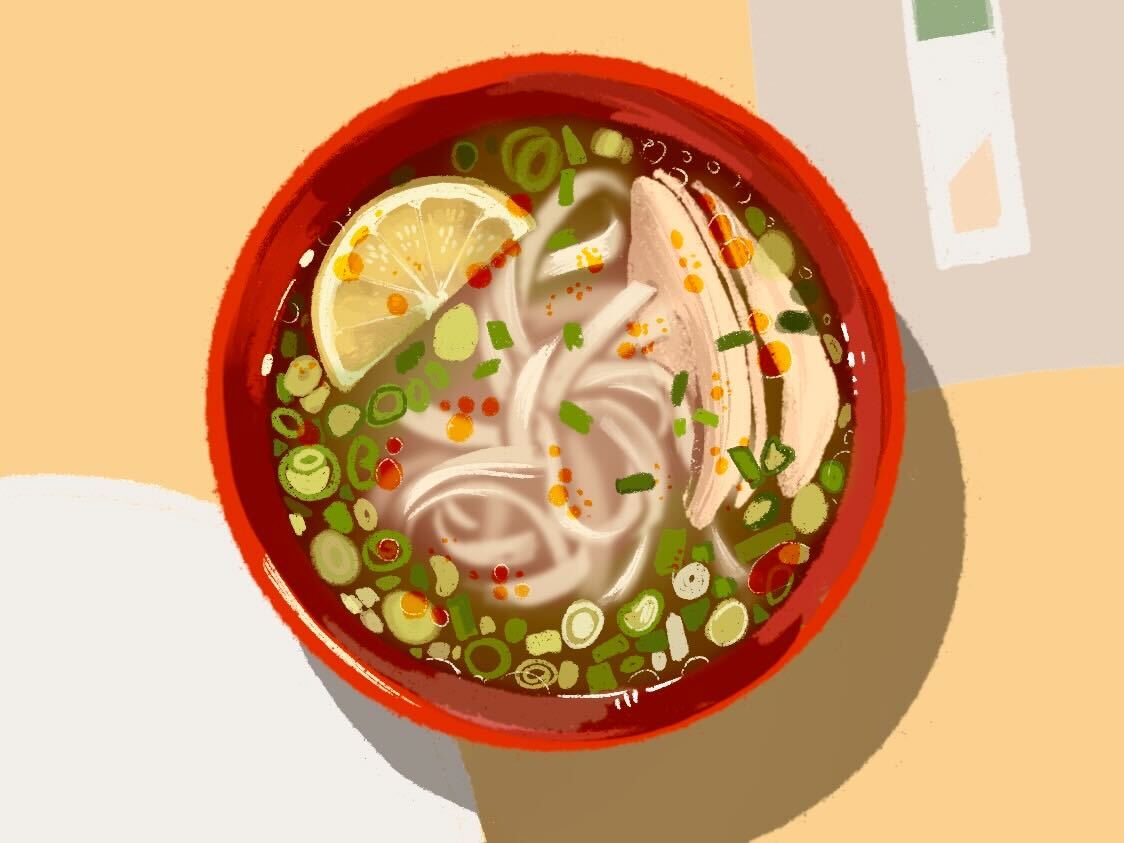
Tap your ID at Wilbur Dining and you’ll be hit in the face with an immense, wrapping line for a station with the words “Star Ginger” written above it. If you are lucky and patient enough to reach the front of this boundless line, you’ll likely see pho, a Vietnamese noodle soup that is warm, comforting and certainly worth the wait. The hearty pho at Wilbur is served on Mondays, Wednesdays and Fridays, said workers at Wilbur.
When you get ready to serve yourself the soup, here’s what you can expect:
- Two broth options (vegetable or chicken)
- Rice noodles
- Two protein options (baked chicken or tofu)
- Add-ins (thinly sliced onions, cilantro, jalapenos, steamed bok choy, green onions)
- Sauces (fish sauce, hoisin sauce, sriracha, chili oil)
The pho broth is rich, with an impressive depth of flavor. The rice noodles (though often stuck together) are cooked well. Onions and jalapeños add a desired crunch to a bowl, while sriracha and chili oil provide a powerful kick. Want a more complex flavor profile? Sprinkle in a touch of herbs. The self service setup and wide array of options allows you to concoct a bowl of soup that is fit to your needs, as all good bowls of soup are.
Star Ginger, the food concept company behind the pho at Wilbur, provides Asian dining to campuses, hospitals and businesses across the country.
Chef Mai Pham, the founder of Star Ginger, had a varied and impressive career before she opened Star Ginger. After escaping post-war Vietnam with her family, she worked as a reporter before opening her restaurant, Lemon Grass, in Sacramento. Drawing on these experiences, she wrote a food column on Southeast Asian cuisine for the San Francisco Chronicle.
Finally, Pham created Star Ginger with the goal of sharing Vietnamese food and culture with a wider audience — including the students of Stanford.
Pho is the national dish of Vietnam, with potential origins in the French dish of pot-au-feu. There are many varieties of pho such as Pho Bo (beef pho), Pho Ga (chicken pho) and Pho Chay (vegetarian pho). The broth, which is often made with beef bones and spices such as star anise and cardamom, is simmered for over 12 hours. It is a food of labor and love, which is why the dish holds such a comforting appeal — a welcome replacement for dorm ramen.
Near the Farm, San Francisco and San Jose have some of the largest Vietnamese populations in the country. Pho is an integral part of the Bay Area’s cuisine — rightfully, it holds an important place in Stanford Dining, too.
On my first intensely rainy day at Stanford, I neglected to bring an umbrella with me to class. I faced the consequences with a soggy sweater and mildly damp notebooks for the whole day. After my last class, I sped to Wilbur to get a bowl of pho, and as I was locking my bike, I proceeded to get drenched head to toe and drop my phone in a huge puddle. The moment I sat down in front of my bowl of warm, rich pho and felt the steam coat my face, the traumatizing memories of the rain faded away.
Should you find yourself in need of the comfort of a bowl of pho on days when Wilbur isn’t serving it, you can try out some of the other great Vietnamese restaurants in Palo Alto and the wider Bay Area. Some of those include Pho Banh Mi in Palo Alto or Bodega SF in San Francisco.
Of course, Wilbur has many other options besides pho. On days Star Ginger doesn’t offer pho, they provide a meat stir-fry option. And in addition to Star Ginger’s offerings, Wilbur also provides several other different Asian-inspired dishes, as well as salad and performance bars with a variety of raw and roasted vegetables.
But the pho has always been the star of Wilbur’s dinners to me. It holds immense cultural history. It literally warms the soul. And it can bond you to other students as you slurp up your steaming bowls. Wilbur and Star Ginger are here to provide all of these things, and given how long students are willing to stand in line for a delicious bowl, it’s here to stay.