
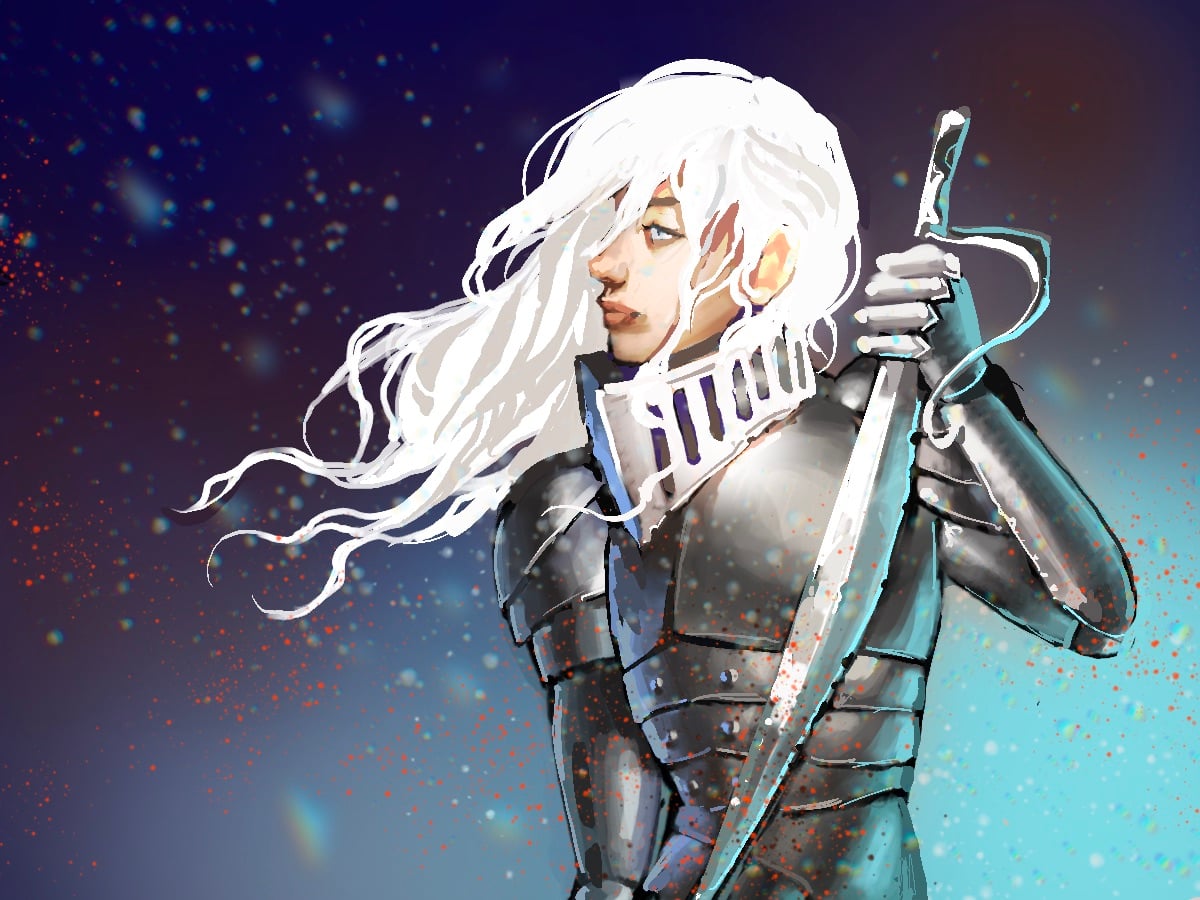
In “What is There Not to Love,” columnist Ashley Diaz ’29 explores the depiction and perpetuation of gender stereotypes in popular fantasy novels.
Editor’s Note: This article is a review and includes subjective thoughts, opinions and critiques.
Sarah J. Maas’ “Throne of Glass” (TOG) is an older but timeless fantasy series, published in 2012 and beloved by readers since.
As a female student at Stanford, I feel an appreciation for Maas’ strong female lead. Our school demands of its students a level of rigor that may diverge from traditional views of women. Even with spaces on campus that support more progressive perspectives, there are still expectations for women: be outspoken but not rude, dress nicely but not to attract attention, be ambitious but not arrogant. But Celaena Sardothien, the main female lead in “TOG,” rejects this.
Also titled “Throne of Glass,” the first book of the series is set in the kingdom of Adarlan, where 18-year-old assassin Celaena is imprisoned in the salt mines of Endovier. After having failed to escape during her year of captivity, Celaena is offered freedom by the Crown Prince of Adarlan as long as she agrees to be the King’s Champion in a deadly competition. She accepts, irrespective of the risk of death, because she has plans.
In just the first few pages of the novel, Maas reveals her protagonist’s snarkiness and quick-witted nature. When Celaena is going through the castle’s hallways, Maas writes: “If she wanted to escape, she simply had to turn left at the next hallway and take the stairs down three flights. The only thing all the intended disorientation had accomplished was to familiarize her with the building. Idiots.”
Celaena isn’t confused or disoriented like the guards want. She is calculating, observing and making plans. Celaena isn’t helpless or easily intimidated — she intimidates others with how much she plans ahead and relies on herself to get things done and save herself.
What is even more impressive is that Celaena is not only a badass, but also a young woman who embraces her love for fashion and her femininity. Maas writes: “[Celaena] loved clothes — loved the feeling of silk, of velvet, of satin, of suede and chiffon — and was fascinated by the grace of seams, the intricate perfection of an embossed surface. And when she won this ridiculous competition, when she was free… She could buy all the clothes she wanted.” In other words: She could kill you, and she’d do so in a dress.
Celaena balances her love for fashion as a young woman and her cunning nature as an assassin simultaneously. Through her character, Maas delivers a compelling message: A woman does not need to reject their own femininity in order to be taken seriously. Celaena demonstrates that loving fashion is neither wrong nor something that gets in the way of being self-sufficient.
Even though Celaena was orphaned as an eight-year-old and later betrayed by her mentor and savior, Arobynn Hamel, she is still kind and compassionate. During the competition, she risks her own victory and life to save another competitor, Nox, from falling from the castle wall: “In a heartbeat, [Celaena’s] arms were around his middle, and she slammed into him so hard that the breath was knocked from her chest.” In saving one of her competitors, Celaena revealed that she will always choose to be compassionate, establishing her as a multi-faceted character.
“TOG” remains relevant because it is one of few series with a strong female protagonist who diverges from stereotypical gender roles seen in today’s popular literature — a female protagonist who is cunning, ruthless and intelligent without rejecting femininity or compassion.
Maas’ fantasy book and series are a reminder that a well-written story can breathe life into multi-faceted female protagonists. Celaena was a refreshing character to experience, showing us that women do not have to choose between being anything but themselves. At Stanford, whenever you have an interview, a presentation, a meeting, anything, you do not have to change or make yourself fit into a mold: you can take up as much space as you want. Through pain and glory, Calaena proves time and time again that women can save themselves, be strong, be kind and dictate their own lives.