
Holly Ellingson is a first year Master of Science in Physician Assistant (MSPA) Studies student at Stanford School of Medicine.
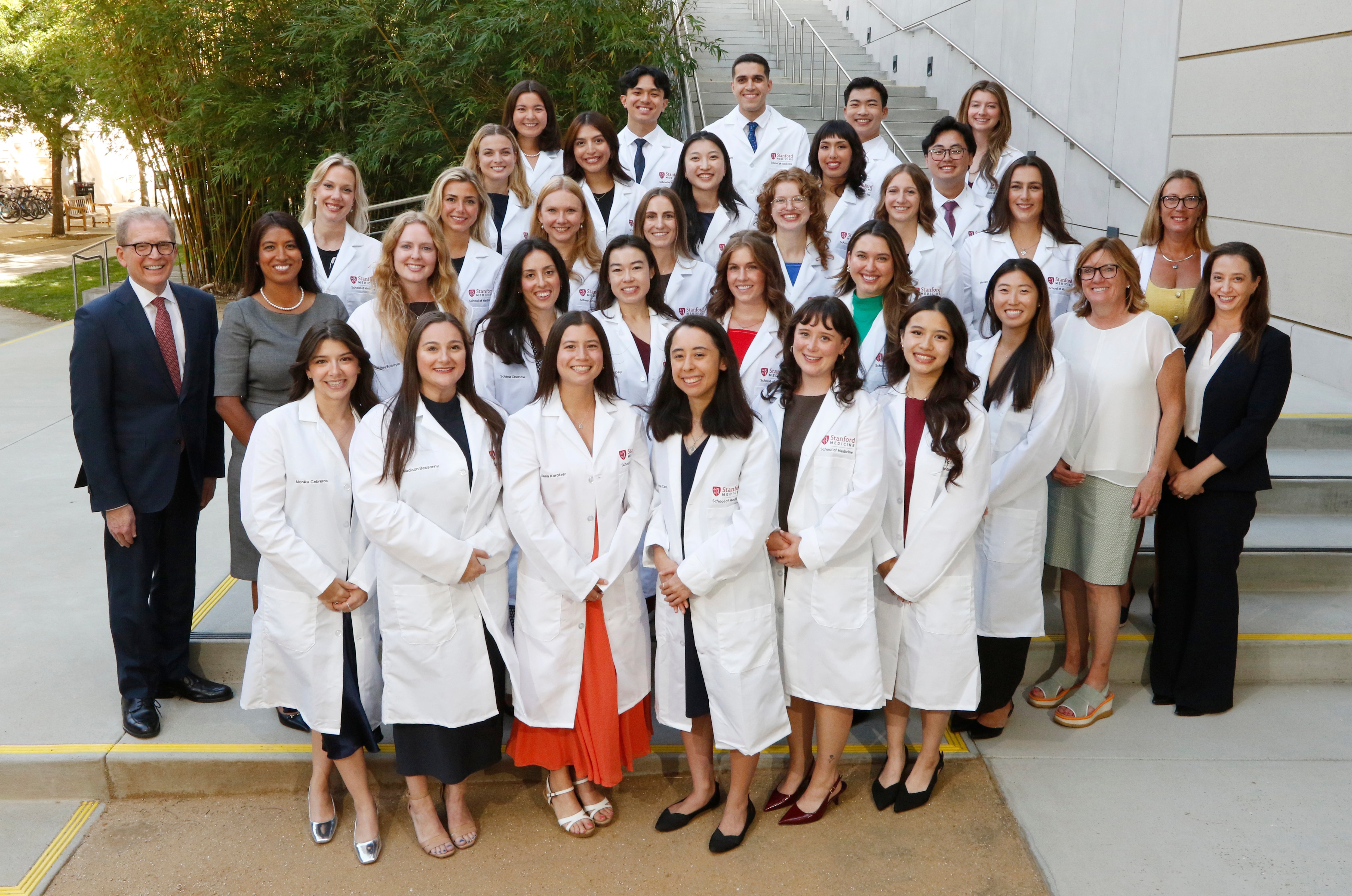
The newest cohort of Master of Science in Physician Assistant (MSPA) Studies students visited campus last month, enjoying the temperate sunshine and smell of warm eucalyptus on campus for the first time. I recall my visit weekend, one year prior and with much colder weather, admiring the intricate carvings, gilded chapel and pristine landscaping of Stanford. It was equal parts stunning and intimidating. I imagine my new classmates feel similarly, yet we find ourselves here under significantly different circumstances. These students have ended their long application journey, having worked thousands of hours in patient care and research, to find their funding for graduate school pulled out from beneath them.
On the same sunny weekend as their visit, the Department of Education released the final version of the Reimagining and Improving Student Education (RISE) Rule, its plan to limit the annual borrowing amount for graduate students. The Rule uses a false dichotomy to split students into two categories: “professional” and “nonprofessional.” It categorizes many of the vital members of a healthcare team such as nurses, physical therapists and PAs as nonprofessional and sets their lending cap to $20,500 per year. Stanford’s PA program is one of the most expensive in the country and costs about $190,000 in tuition alone for two-and-a-half years. For a future PA at Stanford, that leaves a funding gap of almost $130,000. The new category of nonprofessional degree creates a massive hurdle for many students the PA profession needs most.
I chose to become a PA because it was the shortest path and lowest financial burden to becoming a primary care provider. As an undergraduate, my father was out of work and I paid for school myself. By graduation, my debt felt unbearable and grew ever-larger with accumulated interest. The idea of immediately entering graduate school to incur even more debt felt like an irreversible choice, and I wasn’t confident enough yet to take that gamble. Instead, I worked in research, data science and as a medical assistant in internal medicine, dermatology and surgery. I paid off my debt, gained first-hand experience in a variety of specialties and matured enough to feel confident in my vision for myself.
I had decided that primary care was the best way for me to make a difference in this world. A nation-wide shortage of primary care physicians has resulted in long wait times and delays in addressing health concerns. Patients not seen in a timely manner are more likely to end up in emergency rooms, resulting in poor health outcomes and higher financial burden. Rural areas, like those in my home state of Idaho, have even fewer physicians to serve a more dispersed population. I wanted to answer that call for help.
Physician assistants and associates can assess, diagnose and treat patients, as well as prescribe medications. Evidence suggests they provide high-quality, cost-effective patient care with outcomes comparable to their physician colleagues. PAs typically graduate with less debt and receive a higher initial compensation than that of resident physicians. This lower initial debt burden, shorter formal training and career flexibility have made the PA profession highly desirable. As a result, a steady stream of new providers are entering the workforce to increase access to healthcare.
This impact is particularly evident in underserved communities, as many PAs choose to work in primary care and rural settings where they are most needed. However, achieving this impact depends on access to PA programs that can educate and train a consistent pipeline of highly qualified professionals regardless of socioeconomic status.
Although PA school is generally considered a more financially attainable option than medical school, it still presents a significant burden. On a national level, PA students are limited in their scholarship opportunities. Funding for the National Health Service Corps scholarships continues to dwindle, and grants for military students and other scholarships rarely exceed $10,000 per year. Most PA students therefore rely on loans to fund their education. With caps on federally available loans, many will need to turn to private loans as a stopgap; however these often come with high interest rates and lack the benefit of federal repayment and loan forgiveness programs. Without sufficient financial support, PA education will become inaccessible to people like me.
Graduates without full access to federal loans may feel compelled to pursue higher-paying specialities rather than primary care, if they are able to afford the training at all. The consequences are far reaching: Wait times will balloon, preventative medicine will grow more inaccessible and socioeconomic disparities in health outcomes will continue to widen for those who need care most.
As a member of the PA class of 2028, I have been grandfathered into the pre-RISE Rule lending limits and will continue to have access to federal loans to fund my education. Members of the next class are not so lucky. Because the RISE Rule is the result of an agency rulemaking process, there are only three avenues the federal government could take to restore loan access.
First, a court could find RISE unlawful. 25 states plus the District of Columbia have just filed suit in an attempt to vacate it and national organizations for PAs have announced plans to do so as well.
Second, a future presidential administration could issue a new rule restoring funding.
And third, Congress could take action to pass legislation preserving access to federal student loans for future PA students. However, all three of these options require a significant amount of time and political effort.
Classes begin in August for the MSPA class of 2029 and my new classmates have a very limited window to secure alternative funding. They do not have the luxury of the time a longer-term governmental solution will take. This cohort presents an opportunity for Stanford to support the next generation of PA students. Targeted scholarships, aid or internal loan programs can ease the immediate financial burden and serve as an investment in students who will fill crucial care gaps and expand access to underserved communities. I know it would have made a world of difference to me had I waited one more year to apply.