
Before I left for Stanford, my dad helped me organize all my projects and schoolwork over the years in boxes, to be safely tucked away. As I jokingly mourned the decline of my handwriting and flipped through first-grade haikus, my dad came by and set down another box.
“All your books, Ms. Author.”
There they were, my storybooks, lightly dusted and faintly smelling of crayon wax. They were organized in two sections: “Finished” and “Unfinished.” The finished books brought back so many memories, and I carefully set them aside after going through my silly illustrations and storylines.
Then, I peered over the “Unfinished” stack. It took up the majority of the box. I flipped through stories left on cliffhangers, sentences cut-off mid-thought, blank pages waiting for the touch of a crayon. So many projects were abandoned. Just like the book never published, or the chapter book never to be finished, or the green screen production waiting to be edited. Many projects stalled because of my never-ending cycle of perfectionism.
This box wasn’t just a time-capsule — it was a reminder of a pattern that persisted through my artistic journey. I’d start with ambitious projects, chase perfection, and ultimately leave them behind when they didn’t match what I had in mind. It took taking a step back from art and returning to it in college to relearn why I create at all.
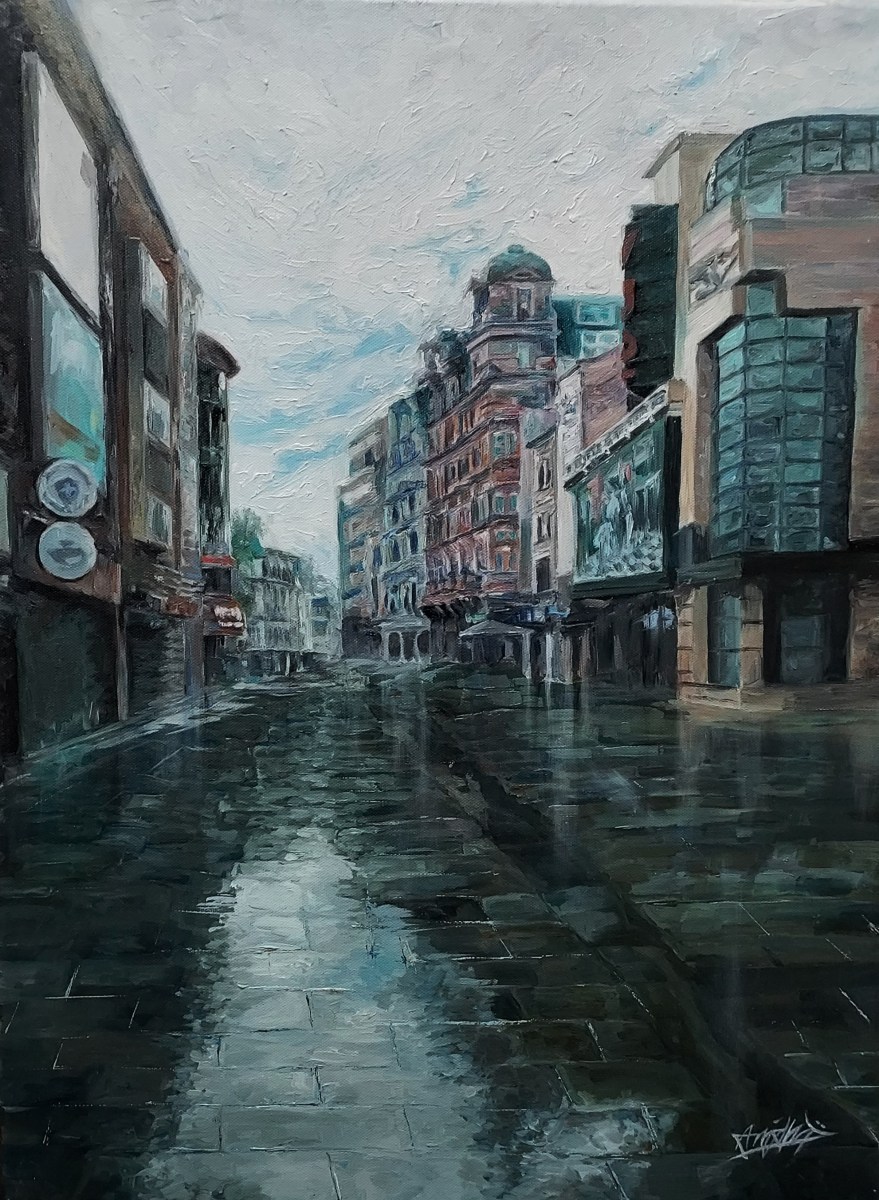
This oil painting is based on a photo I took of a street in London on a rainy day. I studied the American impressionists, with their more loose and expressive brush strokes compared to the French. I enhanced the moody atmosphere, contrasting the bright sky as the storm clears with the still-drenched cobblestone. Learning the science behind oils and solvents, I experimented with emphasizing texture using oil paint. (Courtesy of Amitha Mandava)
***
“Blue Chalk Scrawled on Wall,” circa 2006 — my first masterpiece, which my proud parents refused to erase for years. When they finally did, the rest of the walls of my childhood home were already covered with my canvas paintings and framed artwork.
My parents were the biggest supporters of my creative pursuits. I accumulated art supplies over the years, and ended up memorizing every Crayola color out there (pass the “Purple Mountain’s Majesty,” please…!). My teachers were also incredibly encouraging. Doodling in class, I was nicknamed “Picasso” by one of my teachers.
Ever since I learned to read, I started creating illustrated storybooks. The joy I found in storytelling morphed into a love for writing. So, in fourth grade, I began a multi-year collaboration writing a chapter book with friends. I spent many summer days sprawled next to a laptop on my grandma’s bed in India, where monsoon season electrical blackouts couldn’t stop me from typing away.
I loved collaborating and writing so much that I decided to produce an original play in elementary school, “The Land of Ponde.” I wrote the script and even composed the lyrics for songs and the accompanying piano score. I recruited friends on the playground and filmed an elaborate green screen production in my living room. It was a silly and incredibly fun time, following a Wizard of Oz-esque plotline with dinosaurs, singing munchkins, witches and magic. Hollywood wasn’t ready for this one.
From interactive birthday cards, to mouse-drawn Scratch animations, to a cardboard house for my model dinosaur, I was forever fascinated by the limitless possibilities of art and craft. The idea of sharing my work was on my mind, so starting in elementary school, I researched how to self-publish a humorous story on a mischievous monkey’s escapade, “Mr. Cranky Pranky’s Misadventure.” I aimed to accompany it with original illustrations and translations in every language I knew. Excited by the end goal, I was determined to make it my best work.
Over several years, I worked on the illustrations, only to redo them the next year, from pencil sketches to digital artwork. Being a perfectionist, I never finished these illustrations.
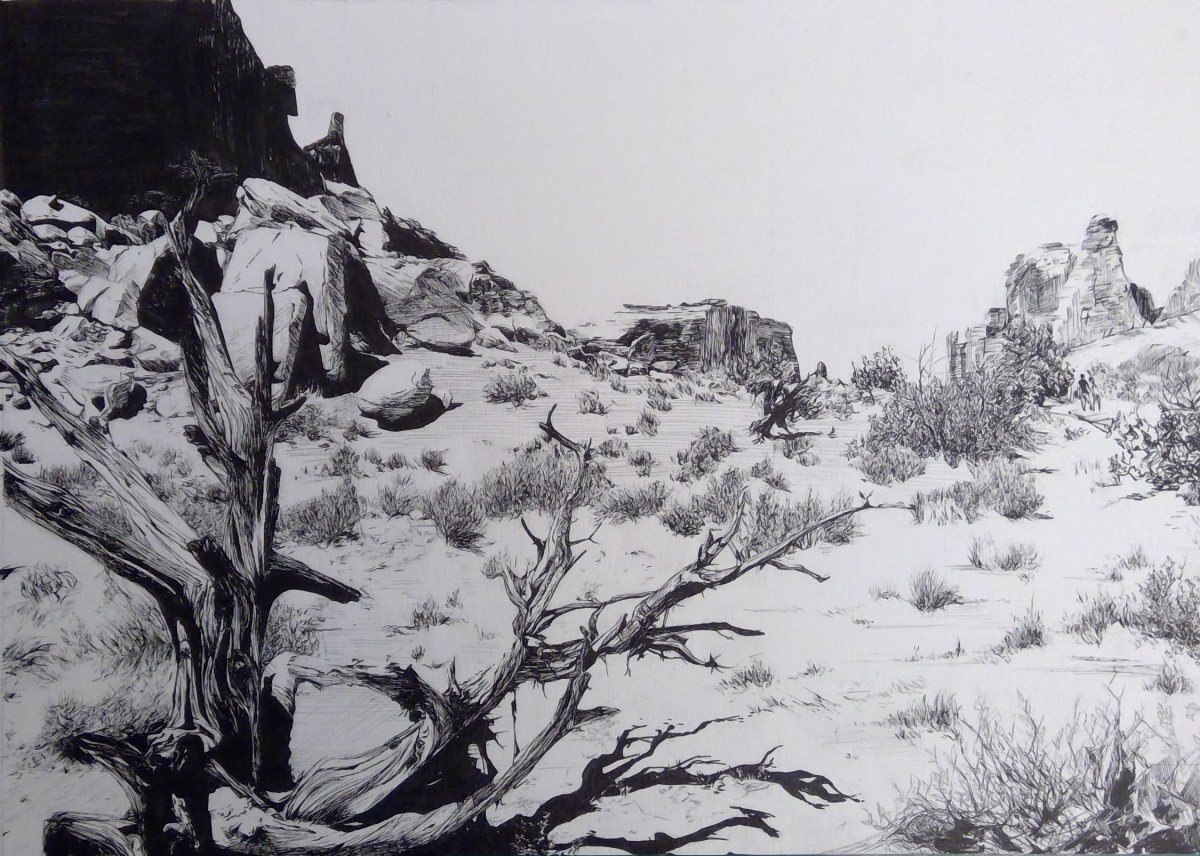
This piece is based on a photo I took at Arches National Park, capturing the beauty of an arid landscape. (Courtesy of Amitha Mandava)
I continued to make art over the years, thanks to project-based classes in middle and high school. But the time I had for personal projects became more limited. In high school, I decided to attend classes at a private studio, simply to force myself to continue setting aside time for art. While I was very busy with schoolwork, extracurriculars and STEM projects during weekdays, I tried to keep creating by dedicating most of my weekends to art and music. Even though paintings that probably should have taken a few weeks started taking many months, I needed this time to take a step back from my hectic schedule. I continued to be just as detail-oriented and sought to push my abilities. I was driven by the challenge.
By senior year of high school, my perfectionism went too far. I pushed myself to explore new media and unorthodox styles. But somehow no piece I created met my expectations. I continued to be ambitious and experimental, but did not find the same satisfaction that drove my passion for art all these years. So I took a break, continuing a few paintings to maintain my technical skills, but didn’t start any big, new projects.
What was my motivation for creating? Was it only to excel in the craft and see my skills improve, challenging myself by taking on ambitious projects? Or was it for its own sake — just to express myself? I knew it wasn’t just one or the other.
During freshman year of college, I did not step into art classes nor art projects. I was afraid of getting drawn into seeking perfection with every piece. I carried a sketchbook on frosh adventures around the Bay Area, but didn’t get around to doing many sketches.
Making art felt like an inseparable part of my identity. I missed the creative outlet and exploration of new media. So, I continued to search for my motivation to create, and slowly came to terms with what it means to me.
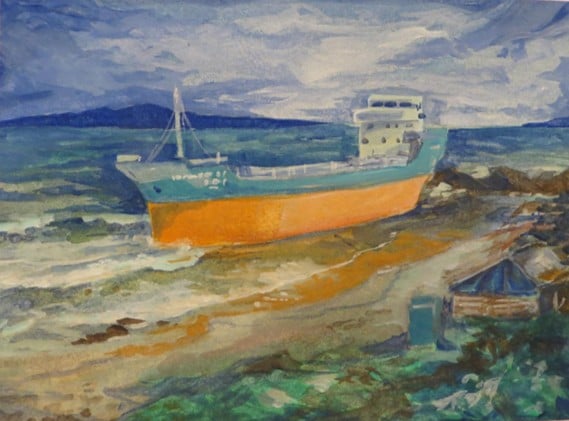
This painting is my first time using gouache, and is based on a photo I took in Vizag, India. I altered the lighting and atmosphere as I sketched the massive ship that had run aground. The sky is foreboding, and it appears to be neither night nor day as if the ship lives on for all time. (Courtesy of Amitha Mandava)
***
Last spring, while clearing up phone storage, I felt a wave of nostalgia as I swiped through a folder filled with pandemic-era digital art. I remember the COVID-19 lockdown as a very isolating period in my life. The middle school to high school transition split friend groups between schools. Though typically the time for a fresh start with a new crowd, online school made getting to know classmates tough.
During this time, I realized that art, to me, was a source of connection. I found community online through art and creative writing. I traded digital art with my middle school friends through ArtFight, collaborated on a sci-fi comic book for a Webtoon contest and connected with online artist communities through social media by sharing and gifting artwork. Writing communities through the WriteTheWorld online camp and NanoWrimo programs at my town’s library helped me connect with other writers globally and locally, through pen-pal programs and community-building contests.
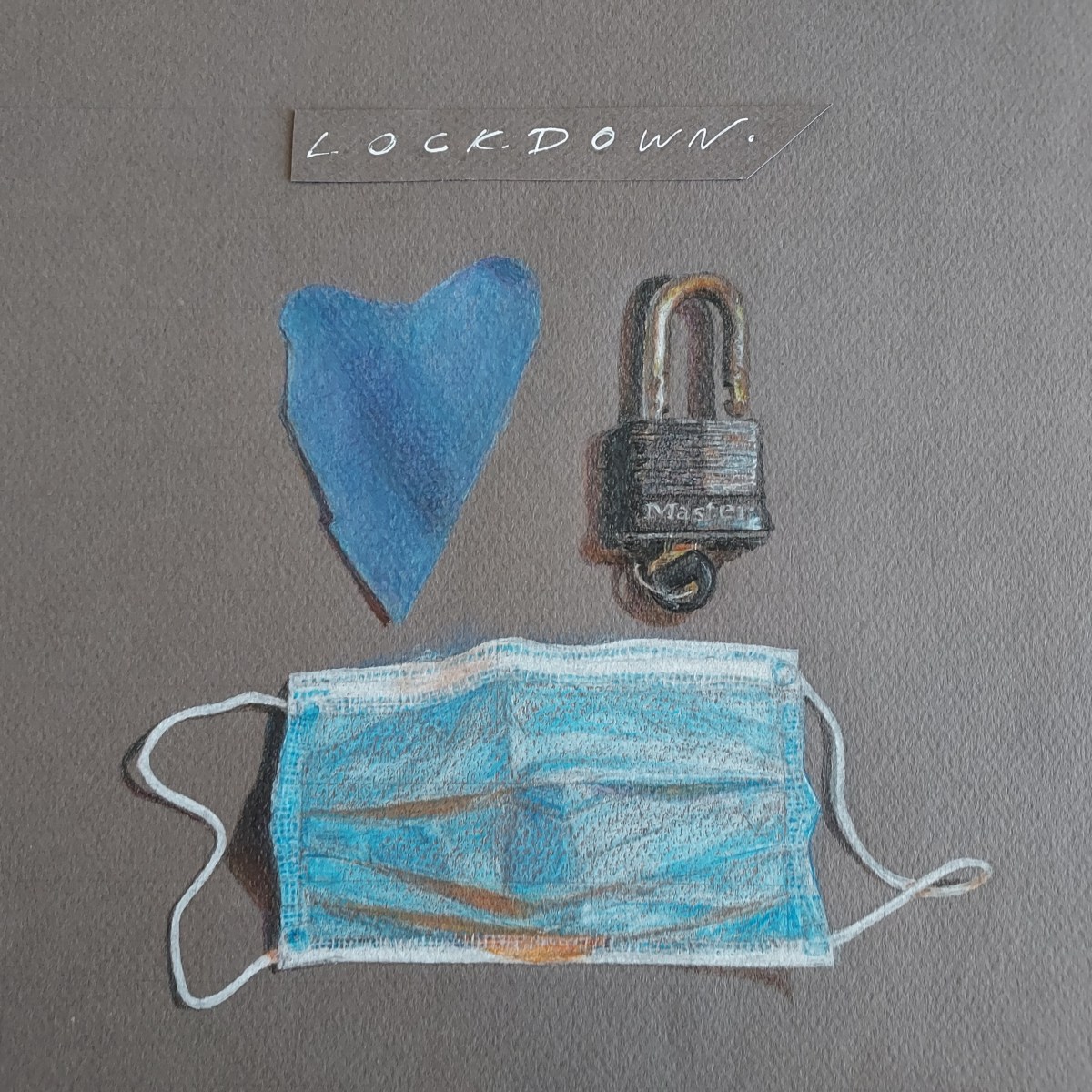
This piece incorporates a study of Trompe-l’œil, including symbols of the COVID-19 lockdown and a cut-out paper heart given by a young student to my mother, who is an elementary school substitute teacher. (Courtesy of Amitha Mandava)
Art was not only a source of connection, but also a medium for reflection. My favorite summer memories are from the incredibly long cross-country road trips my dad was bold enough to plan out and drive for. One 6,000-mile, three-week road trip was from Dallas to Whistler (north of Vancouver), that traversed the Southwest, Rockies and the Pacific Northwest, visiting many national parks. Over the years, many photographs from our travels inspired my artwork: glimmers of sunlight on rainy London cobblestone, a flicker of azure as an Indian Roller ascends from a paddy field, a serene Pacific cove.
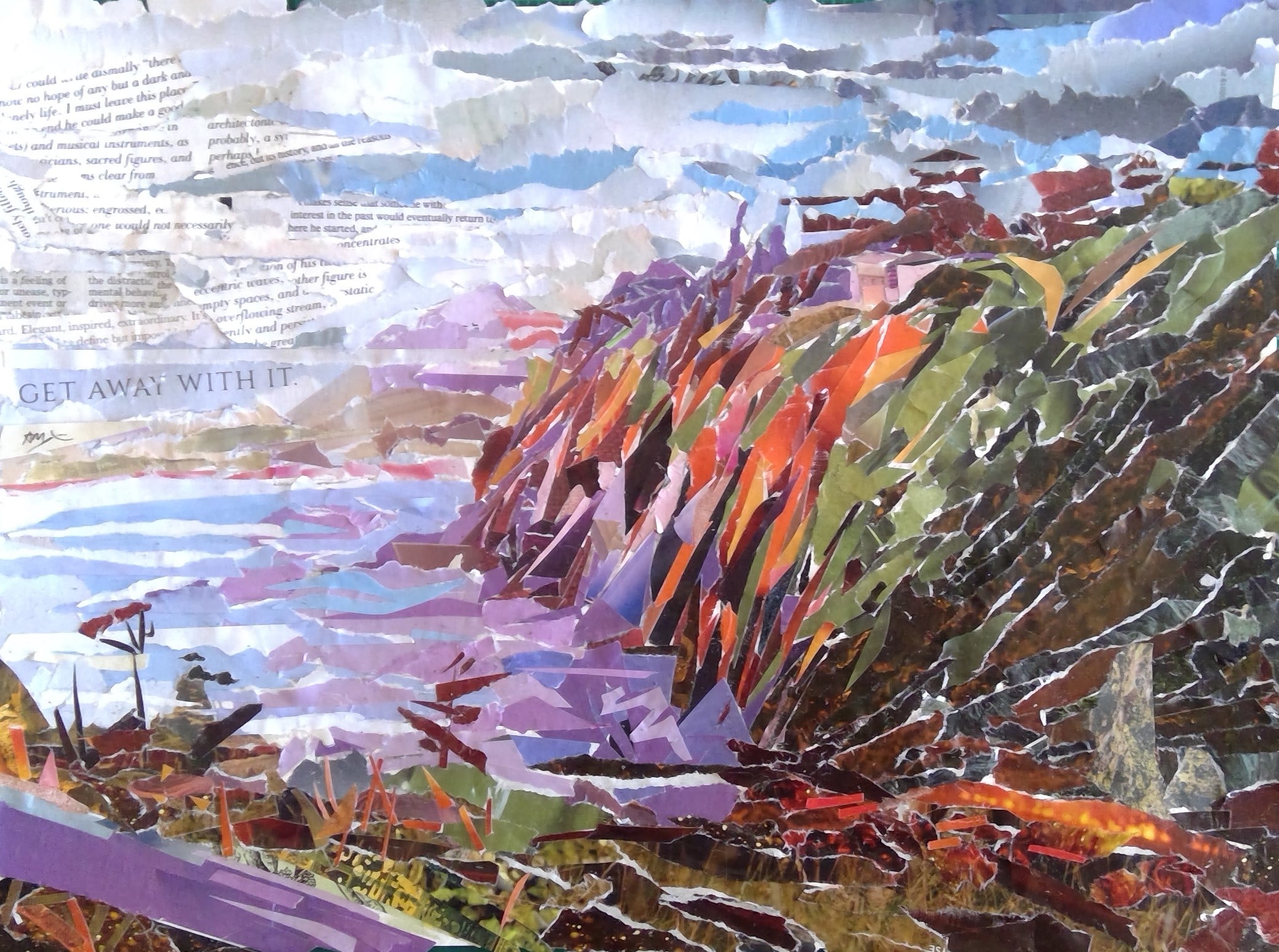
These captures gave me the opportunity to experiment with various media and styles, from impressionistic oil paintings and collages, to traditional watercolor and ink. Every mark on a piece takes me back to two places: how I felt at the place I was traveling, and a snapshot of the time when I created the artwork. My collage, for example, takes me back to the sound of rushing waves and scent of sea spray off the Pacific coast. But it also reminds me of the aromas of Thanksgiving cooking wafting into my room as I created away.
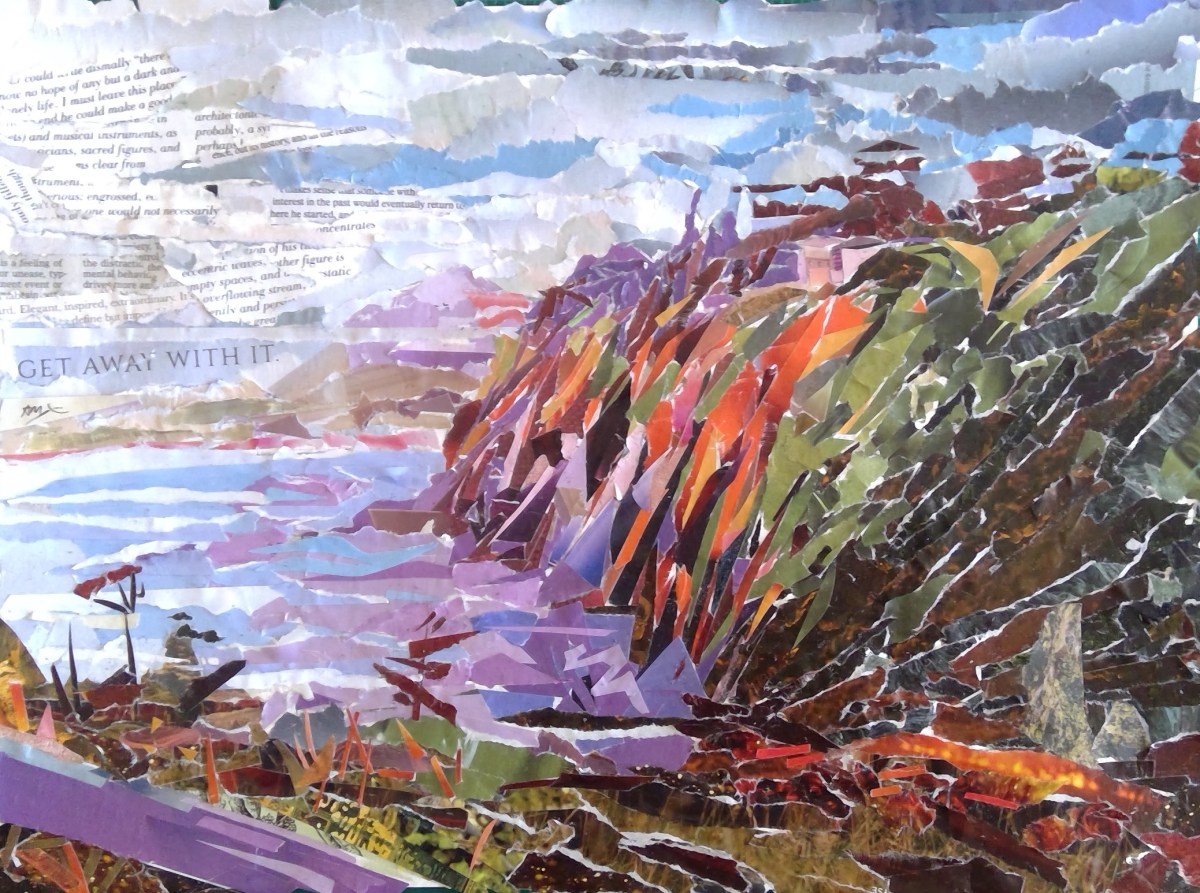
This collage landscape is based on a photo I took of a cliff overlooking the ocean in the Pacific Northwest. I recalled the thrill I felt. The title refers to the poem by John Milton, but takes on a different meaning: emphasizing the desire to see beauty in one’s world. (Courtesy of Amitha Mandava)
I took these reignited motivations with me into sophomore year. I started by making plein air paintings on Outdoor House trips, joined the Dallas Makerspace over winter break and took ARTSTUDI 243: “Anatomy for Artists this Spring”. Art allowed me to reflect and express myself while outdoors, and the class brought me back to an art community, giving me the opportunity to be in a room with other creatives. For the first time in a while, art pulled me into “the zone,” and I’d find myself totally engrossed in creating. Anatomy is a fascinating class, where we have the unique opportunity to draw anatomical prosections in the medical school, sketch at the Rodin Sculpture Garden and learn about both human anatomy and traditional drawing. I often find myself coming out of anatomy class in a daze, broken from the flow, yet feeling fulfilled.
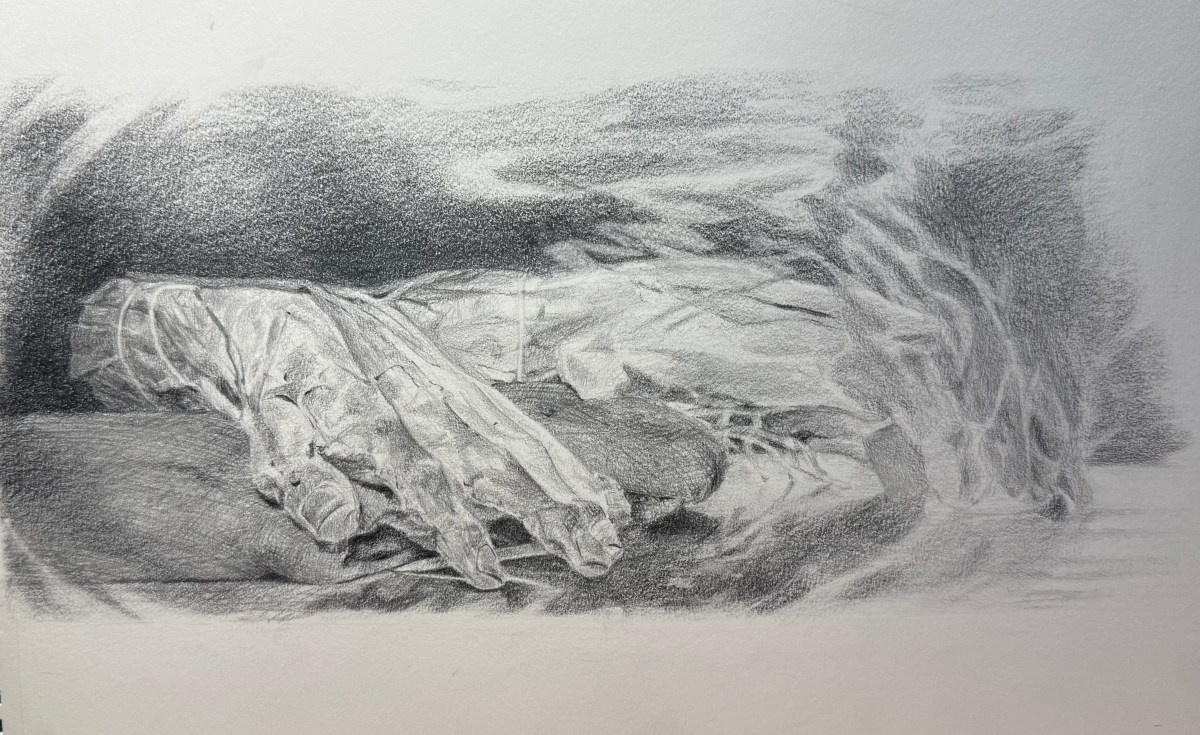
Upper limb prosection drawing in ARTSTUDI 243: Anatomy for Artists, with a creative spin. (Courtesy of Amitha Mandava)
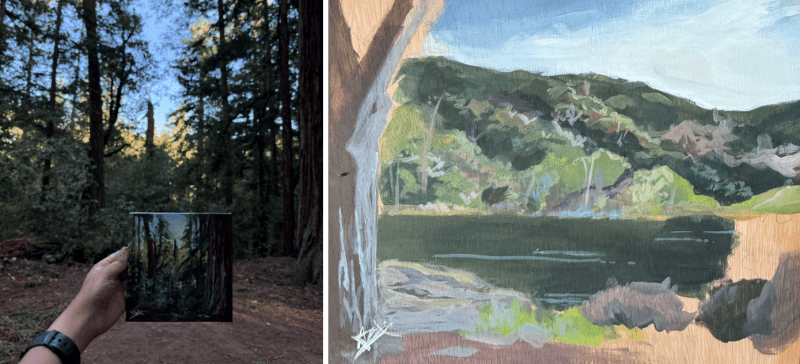
I still find myself challenging my abilities, pushing outside of my comfort zone and taking on ambitious projects. But I tamed my perfectionism to an extent, as I became more cognizant of the breadth of my motivations for making art. Maybe in a way, all the unfinished stories and paintings are a marker of how far I’ve come. Each project was a stepping stone to more ambitious endeavors, giving me the push to explore something new.
It took stepping away from art and returning to it in college to realize that I don’t just create to improve. I create to connect, to reflect and to escape. It’s comforting to know that I have a rewarding outlet of artistic pursuits to turn to when I have the urge to seek out a break from a demanding schedule — perfectionism be darned.
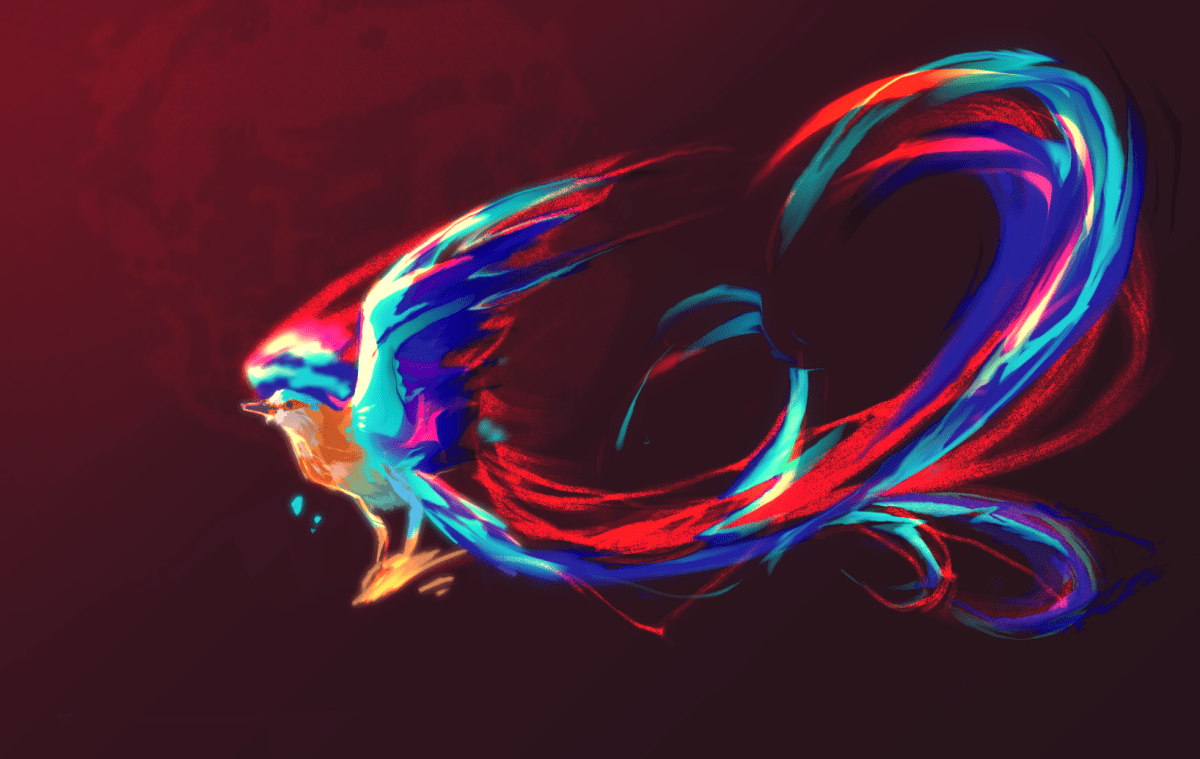
When visiting India, I was enthralled by the beautiful biodiversity, especially of the native birds. This Indian Roller, or “Neelkanth,” is named after the Hindu god Lord Shiva, who has the power of destruction and regeneration. (Courtesy of Amitha Mandava)
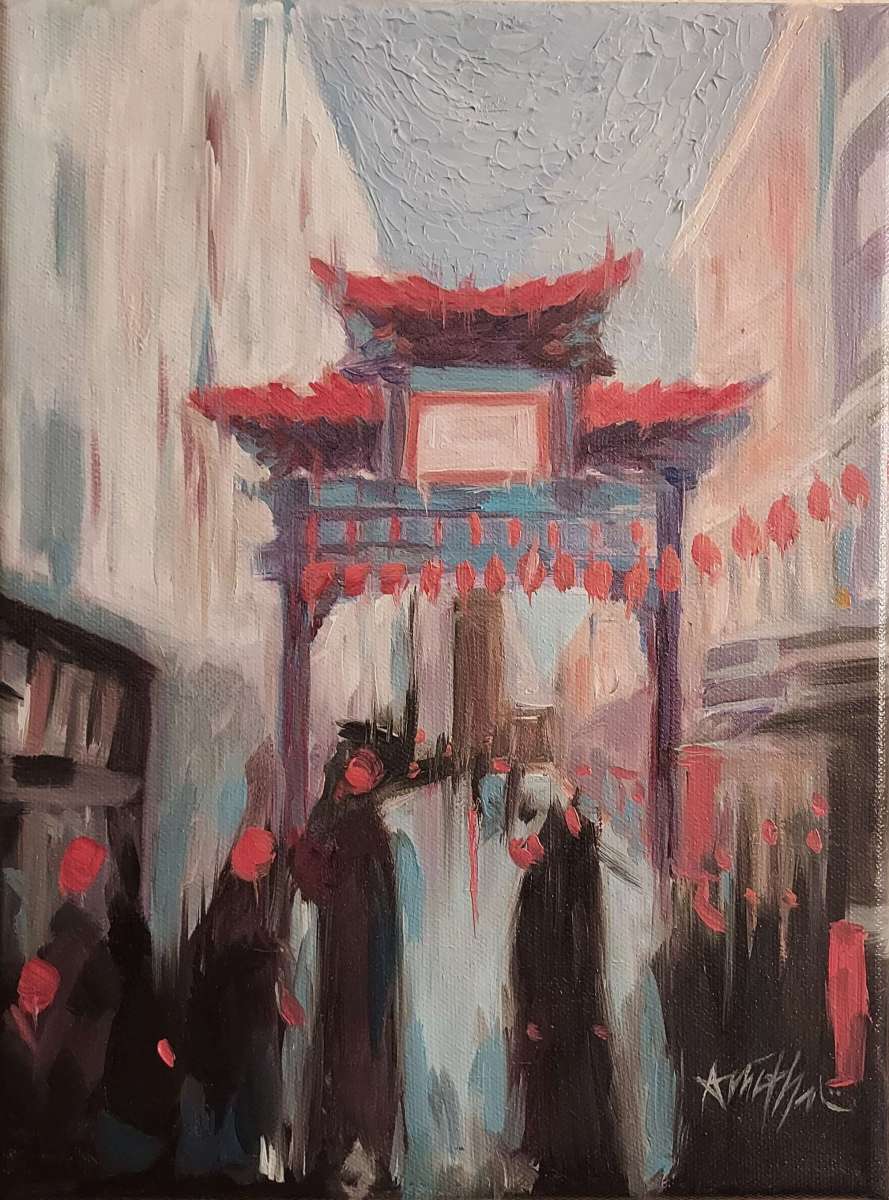
This piece is inspired by a photo I took of Chinatown in London, experimenting with expressionism and a limited color scheme. (Courtesy of Amitha Mandava)