
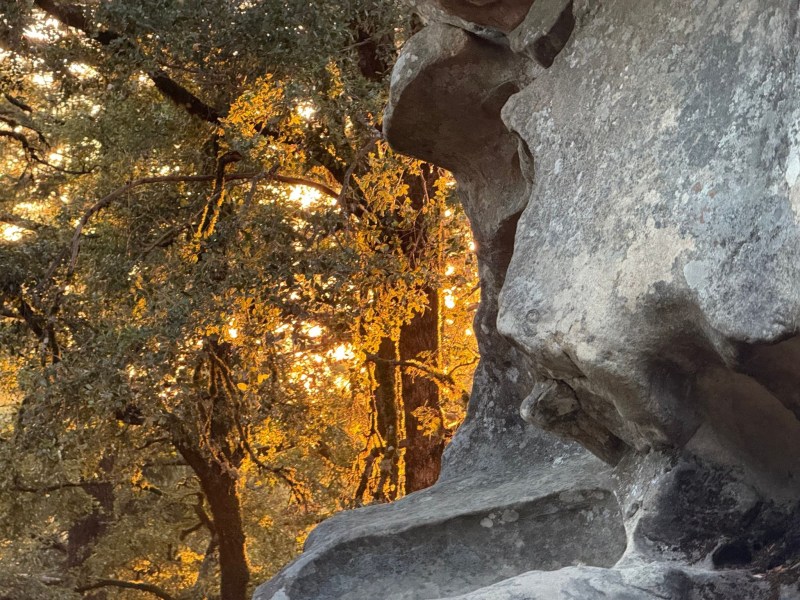
I went on a short hike at Castle Rock State Park. It was a personal goal since seeing it featured in Keith Schwarz’s infamous list of outdoor activities. At sunset, a friend reminded me of a word I taught him: komorebi, or the light that passes through trees.
There are a number of words that are present and absent across language. The Ifalik lack a word for surprise but occasionally feel fago, a blend of compassion and sadness felt in dependent relationships. The Japanese report amae or the desire to be cared for. The Germans speak of schadenfreude, the distinct pleasure drawn from another’s misfortune. And so it should come as no surprise that there are a number of self made projects that seek to fill the gaps: to reify our feelings.
There is a word housed in the Dictionary of Obscure Sorrows. It is called onism or the awareness of how little of the world you will experience. I can’t help but feel it all the more as of late.
When I entered Stanford, a close friend hung a Venn diagram on his door. It asked us to choose two of three options: sleep, study or social life. The claim is that one cannot have all three.

There is so much I want and need to do. And yet I feel frozen in place. My thoughts stale and uninteresting. My reaction was to hop from side quest to side quest. From acting in Yakada Yaka to hosting a Datathon to co-running a reading group to publishing articles, I was doing things. And, yes, the 50 hours of accumulated sleep debt over the quarter would suggest I made some choices along the way.
One of those side quests was Designing your Spiritual Life, a three-day retreat in Stanford Sierra Camp hosted by ORSL and the Design Lab. I had the pleasure of meeting Deepak Ramola who, among many other things, is the author of a short blog titled, “12 Life Lessons from a Man Who Has Seen 12000 Deaths.” I am drawn to the 10th.
“In the last days of their life, a lot of people can’t speak, walk or communicate with others with as much ease as they could earlier. So, they turn inwards. And start to remember the things that made their heart sing once, things that they cared to learn more about over the course of their life, which enriches their days now.”
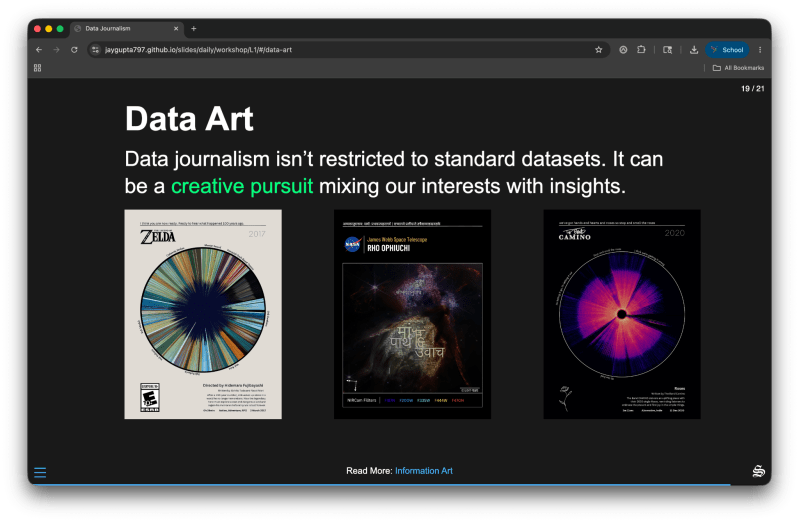
We need to choose what we experience. Better, we need to choose how we experience. At Stanford, I was exposed to whole worlds of thinking and feeling that I did not know to be possible. A small example: I am sitting on a bench outside of Green Library with Cheryl Phillips, a decorated data journalist. She shares that her work gave a new life to the world around her. To be a data journalist is to see the world and its possibilities augmented by the data it admits.
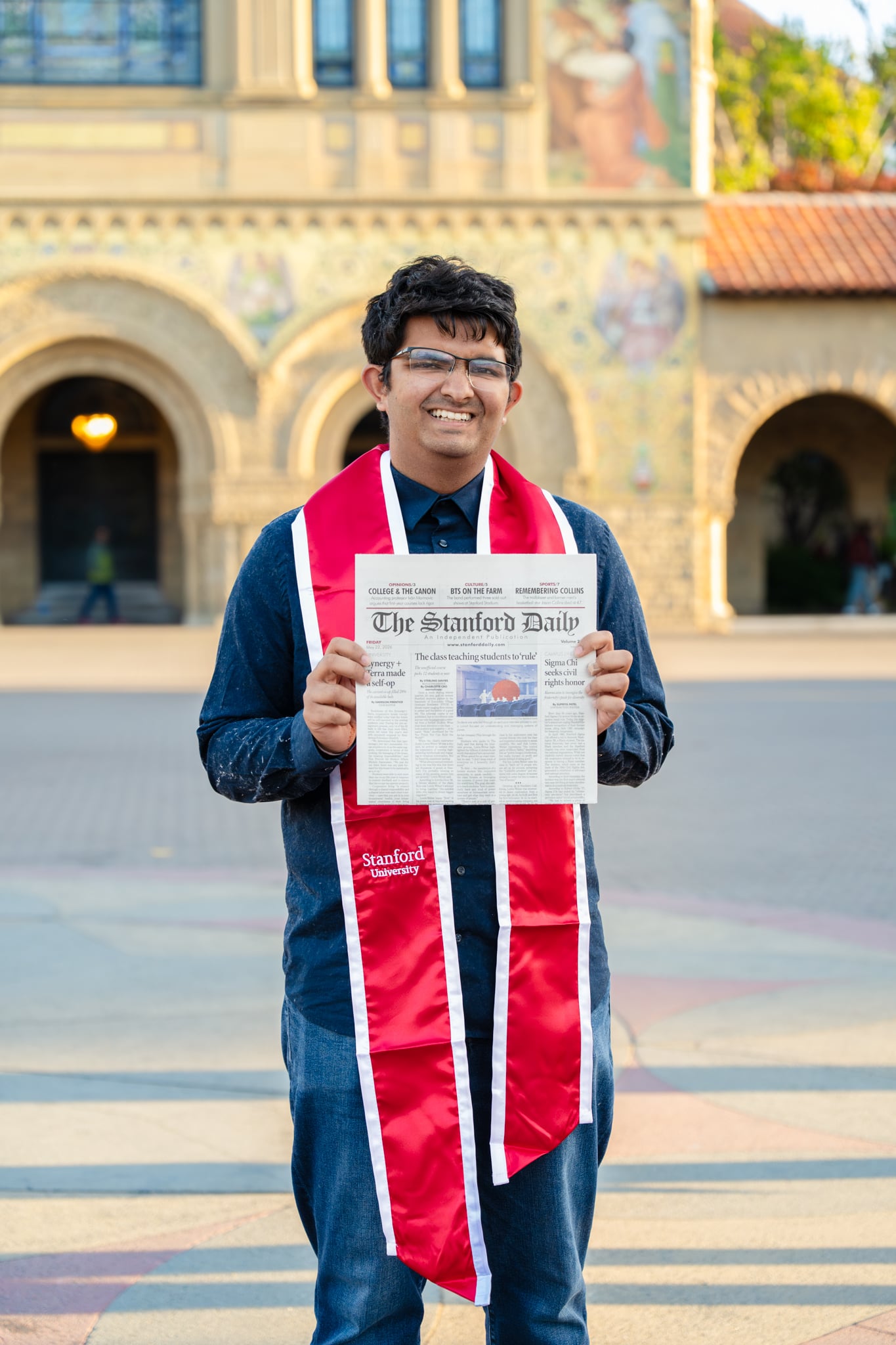
And so cheers to the experiences we have had, will ever have and never will.