
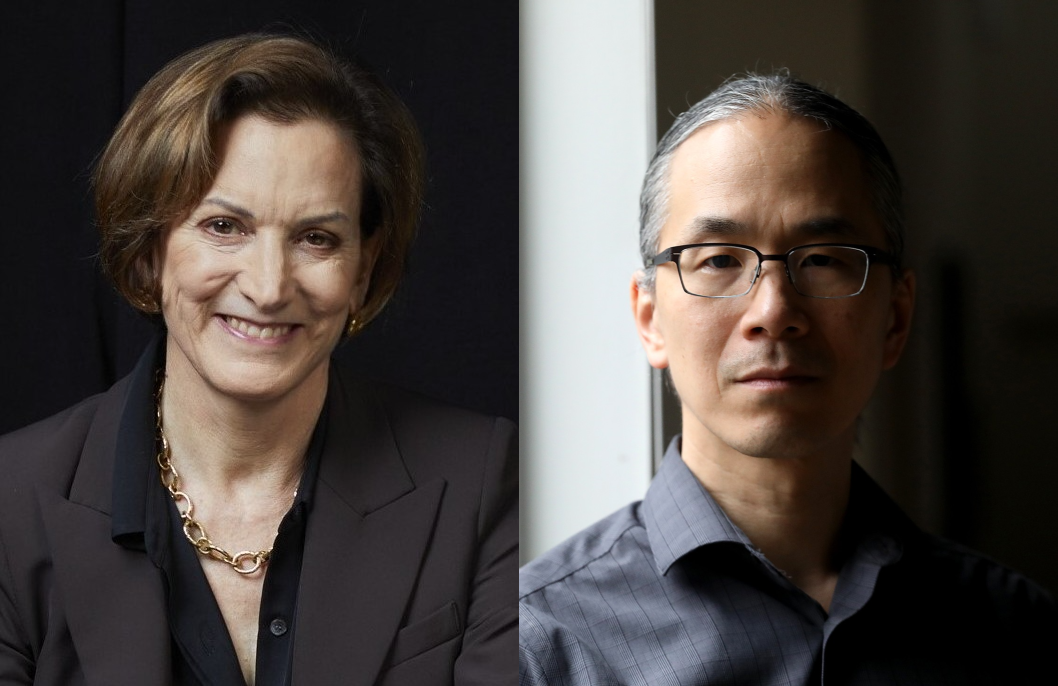
Changes have come to the Civic, Liberal and Global Education (COLLEGE) program. Established in 2021 to enhance students’ engagement with the liberal arts, COLLEGE will now incorporate the Three Books Program, a former New Student Orientation (NSO) staple, into its curriculum, beginning with the 2026-27 academic year.
COLLEGE will require first-year undergraduates to read three books, discuss them in a structured classroom setting and attend events featuring the authors on-campus. The books include Ted Chiang’s “The Life Cycle of Software Objects” and Anne Applebaum’s “Twilight of Democracy: The Seductive Lure of Authoritarianism,” with the third book to be determined.
“What’s exciting and daunting about having a first-year requirement is that it has to serve all students, regardless of their intellectual interests, career hopes, or personal views,” wrote Dan Edelstein, director of COLLEGE and a French professor, in an email to the Daily. “You need to identify questions and topics of universal concern … Since we live surrounded by others, and mostly in democracies, COLLEGE also helps students improve their communication skills, especially with people who think very differently.”
The Three Books Program was founded in 2004 to encourage students to engage with literature before starting college and to give them a “common set of references, something to talk about,” Edelstein added.
Chiang’s novella, which received the 2011 Locus Award for Best Novella and the 2011 Hugo Award for Best Novella, traces the stories of engineers Derek and Ana as they experience the rise and fall of a game design company, Blue Gamma. The company creates “digients”–– sentient, animalistic avatars with human-like developmental arcs –– which eventually receive their own physical bodies.
“The Chiang [book], like Mary Shelley’s 1818 ‘Frankenstein,’ which students are also reading in the fall this year, [is] prescient,” Sarah Pittock, associate director of COLLEGE, wrote to the Daily. “In the age where AI can approximate natural language, we have new reason to consider the social impact of our tools on our most intimate relationships.”
In writing the novella, Chiang strayed from the common science fiction trope in which robots emerge fully-formed in their mental and physical abilities –– a concept that Chiang said he found unrealistic. Instead, he considered the labor that families and communities put into their children and the long arcs of their development, and how that might translate into a science fiction context.
“What do you owe other people?” Chiang said when asked what he hoped Stanford students might take away from his novella. “[This question] lies at the heart of civic responsibility. Romantic relationships, familial relationships, even a relationship with your pet … those are all personal relationships. But there is still the question of: What do you owe the other people in society, people who you do not have a personal relationship with?”
Applebaum’s “Twilight of Democracy” will be the focus of winter quarter. The book stems from Applebaum’s conversations with journalists who turned to support far-right candidates, and ddresses the role of the clerc, the public intellectual, in platforming the rule of authoritarian regimes to the masses.
“[Applebaum’s work] likewise considers interpersonal relations, only she’s interested in the ways that polarized politics can disrupt families and close friendships (among other things),” Pittock wrote. “Her book fills an important gap in Citizenship in the 21st Century [one of the COLLEGE courses]. ‘Twilight of Democracy’ shows that we can’t assume that all people will be in favor of liberal democracy and documents the conditions, such as social media, that can make the authoritarian alternative appealing to people.”
Applebaum, a journalist who writes about history and politics, has lectured at Stanford in the past.
“I am afraid that some of Silicon Valley’s most famous innovations are anti-intellectual: addictive social media, algorithms that promote anger and fear, AI programs that allow users to stop using their brains altogether,” Applebaum wrote to the Daily. “I am not going to blame Stanford for all of that, but Stanford is one of the places where I hope people will begin to work on antidotes to the products that nearby companies designed to prevent people from thinking.”
Chiang, Applebaum and the third author are all slated to come to campus for their own discussion event, in the fall, winter and spring quarters, respectively. Each event will be moderated by a Stanford professor whose work engages with related ideas.
In previous years, Stanford asked first-years to read each of the three books before the start of the school year, then attend a one-hour discussion with all three authors during NSO. Edelstein noted that the change was driven primarily by logistics. Now, the administration will no longer need to ship over 1,700 books around the world or condense discussion of all three books into one class time.
Past iterations have oriented the selection of all three books around a singular theme. For example, last year’s selection, including books like Stanford biology professor Robert Sapolsky’s “Determined: A Science of Life without Free Will” and political scientist Lea Ypi’s “Free: Coming of Age at the End of History,” focused on free will. By contrast, this year’s topics are more diverse, with the books to be read in separate quarters.
Both Chiang and Applebaum’s books were chosen based on nominations from COLLEGE-affiliated faculty. At least two people from each COLLEGE subcommittee were asked to read the nominated books to come up with a ranked shortlist. Edelstein then ensured the selected writers were willing to come to campus.
James Hamilton, vice provost for undergraduate education, commented on the value of independent thought through reading.
“Reading a book rather than a short excerpt can put you in a different world, lead you to dissect and reassemble arguments, and come to your own summary and conclusions,” he wrote to The Daily.
Faculty teaching spring quarter COLLEGE classes are set to choose a third book for the spring later this year.