
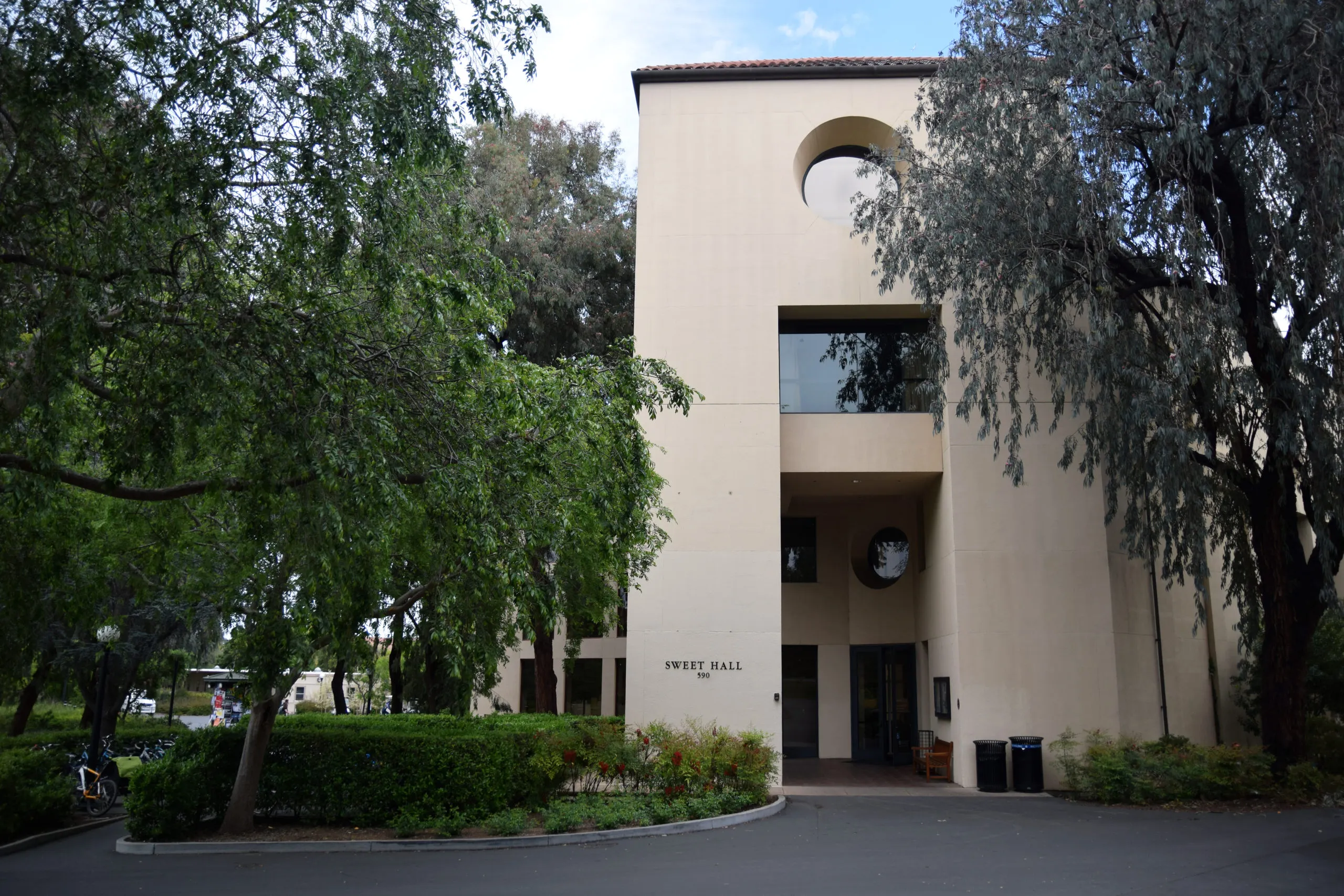
Stanford Career Education (CareerEd) will soon move from being part of the Office of the Vice Provost for Student Affairs (VPSA) to the Office of the Vice Provost for Undergraduate Education (VPUE). The change places CareerEd alongside other VPUE branches that advise students on courses, majors and careers.
CareerEd’s former executive director James Tarbox retired this summer, giving CareerEd the chance to evaluate changes in the job market, according to VPUE James Hamilton. Tarbox was not available for comment.
“The idea is that with the changes brought about by AI, it’s even more important for us to think about how you connect students with that first job, and how we get the people who are talking with students to talk with each other,” said Hamilton.
Academic Advising and Stanford Introductory Studies (SIS) are housed within VPUE. The office also provides $8 million each year in undergraduate research grants, Hamilton said. Additionally, three of Stanford’s study abroad programs – Berlin, Kyoto and New York – are connected to internships.
“When you step back and think about how students at Stanford are led to think about courses, careers, majors, education, part of it happens already in VPUE,” Hamilton said.
In a statement to The Daily, Dan Edelstein, a French professor and one of the heads of SIS, wrote that students sometimes lack information about how to prepare for their full career, beyond a first job.
“Students understandably feel a lot of anxiety about their professional futures,” Edelstein said. “By moving CareerEd into VPUE, I’m hopeful that we can allay those fears so that students can make decisions about their studies that reflect their authentic selves.”
The University aims to fill CareerEd’s executive director position by the end of fall quarter, Hamilton told The Daily. New leadership, he said, marks a natural time to shift CareerEd from VPSA to VPUE.
“We’re not swapping out one type of advising for another type of advising,” Hamilton said. “It’s more making sure that advisors are speaking with each other and also sharing insights.”
In response to a changing career landscape, CareerEd will devote more resources to gathering data on where Stanford students land their job, their outcomes five to 10 years after graduation and the relationship between their majors and career.
The Stanford Do Good Now Career Fair, organized for the first time by students last spring, will return this year, supported by CareerEd and the Haas Center for Public Service.
“We really want to stress that choosing your major is not choosing your career,” Hamilton said. “Sometimes when I talk with students, they believe that there are only two or three jobs or types of jobs out there, and we want to make visible more pathways.”
Hamilton noted the importance of AI fluency and students’ ability to write and code with and without generative AI. The computer science department teaches these skills in two new classes this quarter: CS 193T: “Thinking with AI: Strategies for Effective and Ethical Human-AI Collaboration” and CS 193V: “Effective Vibecoding.”
However, Hamilton also stressed that employers are looking for people who can think critically and communicate clearly, skills taught in the humanities.
“That’s going to be increasingly important, and judgment, values, the ability to collaborate and communicate, to listen closely,” Hamilton said. “All of those are things that people develop in the humanities.”