
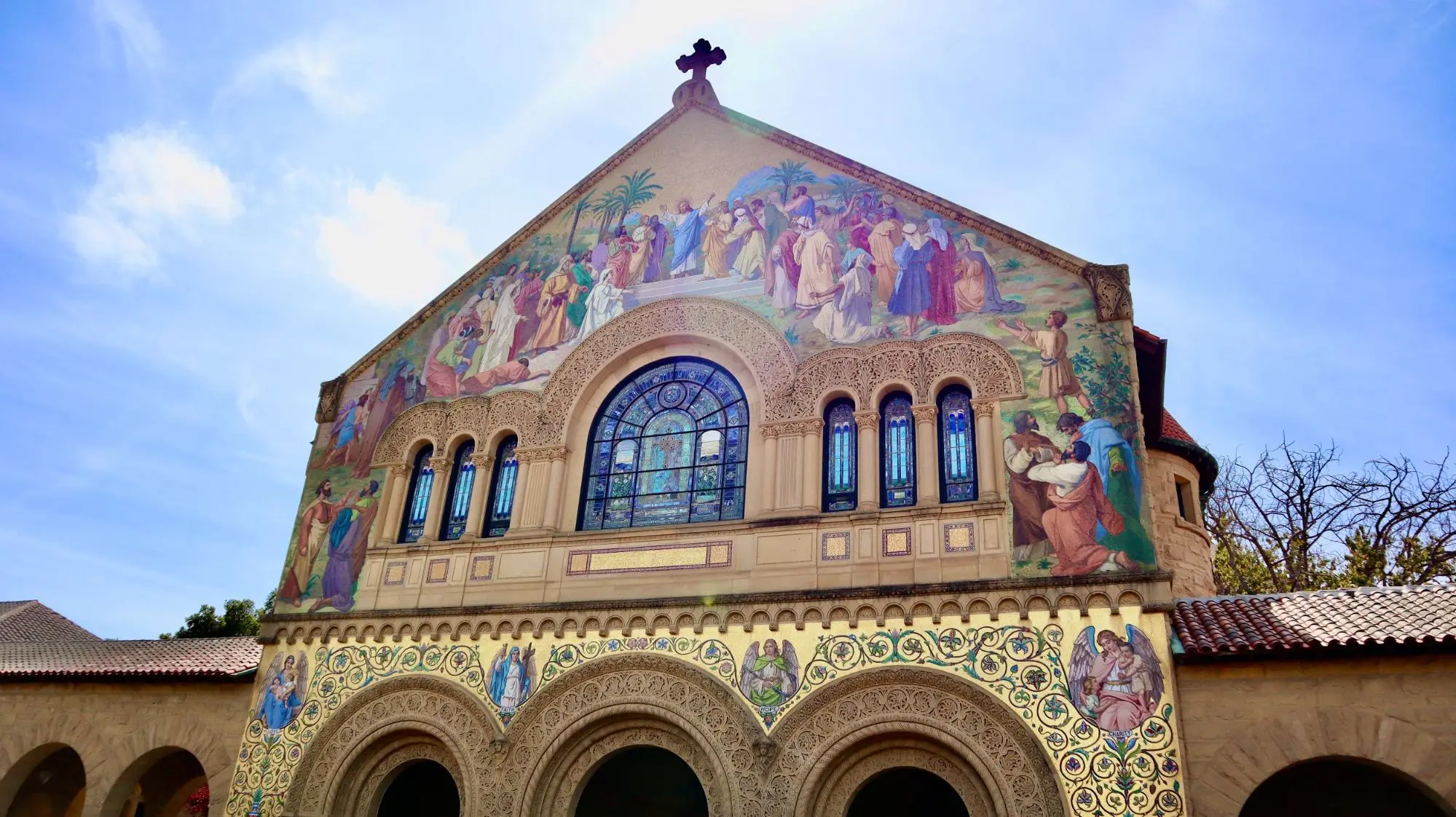
Mike Kearnes (MSx ’19) was baptized at Memorial Church on November 11, 2018, and later received a conditional baptism. He can be reached at mkearnes ‘at’ alumni.gsb.stanford.edu.
Memorial Church has long held biannual Baptism Sundays as a public initiation into the Christian life. Yet the baptisms performed there since at least 2018 have used formulas that the majority of global Christianity — Catholic, Orthodox, and most historic Protestant traditions — do not use, and that may hinder recognition or even require rebaptism in certain denominations.
If Stanford performs something it calls Christian Baptism, and many major denominations may not recognize that Baptism, Stanford is failing to both disclose what they are offering and why they are deviating from the historic standard.
The problem lies in the language Memorial Church uses to perform its baptisms. Memorial Church has used at least three different formulas since 2018, including a revision after I contacted the Office for Religious and Spiritual Life in 2025. As of May 2026, the minister’s statement was: “We baptize you in the Name of the one known in many ways, God, Jesus, and the Holy Spirit, Father, Son and Holy Ghost. Amen.”
In Matthew 28:19, the instruction is for new Christians to be baptized “in the name of the Father and of the Son and of the Holy Spirit.” In the 2,000-year history of Christianity, historic churches have used this formula to enter Christian life.
The extra phrase of “the one known in many ways” and the unorthodox structure add additional terms that may invalidate the baptisms in many major Christian denominations. The minister at the last Baptism, the Dean for Religious and Spiritual Life, said, “we baptize” rather than the Catholic form, “I baptize,” which historic Protestant rites also prescribe, including her own denomination. Within the Roman Catholic Church, a recent 2022 controversy in Arizona invalidated thousands of baptisms because of this exact language shift. This incident highlights the particularity required for valid Baptisms in the largest Christian denomination.
Memorial Church also failed to disclose this deviation in language when I went through the Baptism ceremony in 2018. The website for the Office of Student Religious Life states: “The sacrament of Baptism, historically a Christian rite of initiation, is available at Memorial Church for children and adults twice per academic year during the Fall and Spring Quarters. It is offered during University Public Worship and is not a private ritual or ceremony. More than a momentary act in one’s life, Baptism is also considered a beginning to a lifelong spiritual pilgrimage.”
There is no mention of what the traditional language should be, or why Memorial Church differs. As a participant in 2018, I did not understand these subtleties nor did the Church educate us in any way about the words selected or the variance from the Matthean formula.
Memorial Church’s stated goal is to provide ecumenical services for all. But in this language change, Memorial Church distances itself from those sections of global Christianity that require the exact wording from Matthew. Memorial Church has also continued to use a custom-made creed instead of the historic Apostles’ Creed, which served as the baptismal covenant for centuries, with Creeds only being dropped by some denominations in the last few centuries.
Because of these issues of form and intent, I eventually received a conditional baptism in my own church. My church leadership and I agreed that this was the most responsible step. Based on the evidence above, anyone baptized at Memorial Church in at least the past eight years should also be notified of the potential problems with the form of their Baptism and be directed to consult their current clergy for guidance.
While Baptism is meant to unite believers across the Christian faith, Memorial Church’s modified formula effectively excludes candidates from full participation in many Christian traditions worldwide — those that require explicit Trinitarian wording and the use of water. An Orthodox catechism states that baptism is repeated when it is not administered in the “name of the Holy Trinity.” The Latter-day Saints would require rebaptism because their intent is different from that of traditional Trinitarian Christianity.
Ecumenical intent does not overpower what many Christians believe to be one of the clearest commands from Scripture. A small change results in more than just a difference in language, it results in doubt about the veracity of the promise given to those baptized.
Memorial Church’s pattern of prioritizing expansive, inclusive language and “a range of images, pronouns, and names for God” over fidelity to Christ’s explicit command has the opposite of its intended effect. Rather than welcoming more people, it creates confusion and barriers for those who belong to historic Christian traditions. What may seem like a small liturgical change carries real spiritual weight: Memorial Church promises a Christian Baptism but delivers something different.
While the goal of most services at Memorial Church is to be ecumenical, when the Church offers Baptisms (and Communion, the other explicitly commanded Christian sacrament), it must offer what it claims to provide: participation in the life of the church in accordance with traditional beliefs. The most ecumenical action Memorial Church could take is to use the explicit formula Jesus commanded, with first-person pronouns.
The path forward to restoration is clear. The Dean and chaplain should contact everyone baptized since the church moved away from the orthodox formula, apologize and explain the issue, offer conditional baptisms using the historic Trinitarian formula and the Apostles’ Creed and commit to using “I baptize you” with the historic Trinitarian formula going forward.
Stanford — and its students — deserve nothing less from the physical and spiritual heart of campus. A chapel that offers Christian Baptisms should use the most ecumenical form it claims to be offering, and tell candidates if it does not meet the mark for much of global Christianity.