
Editor’s Note: This opinionated piece is part of a series in which Daily writers argue opposite sides of the same debate. Read the op-ed opposing Trump’s federal freezes here.
Imagine, for a moment, the richest private clubs in America, universities sitting on endowments larger than the GDPs of many nations, receiving billions of taxpayer dollars each year to ‘advance society’ and ‘cultivate innovation.’ At Columbia, that money helped fund invaluable staff like the Associate Director for Diversity, Equity and Inclusion (DEI) for the Lamont Doherty Earth Observatory.
Meanwhile, the same institutions faced federal findings of Title VI violations for failing to protect Jewish students from harassment, and ranked among the worst for free speech.
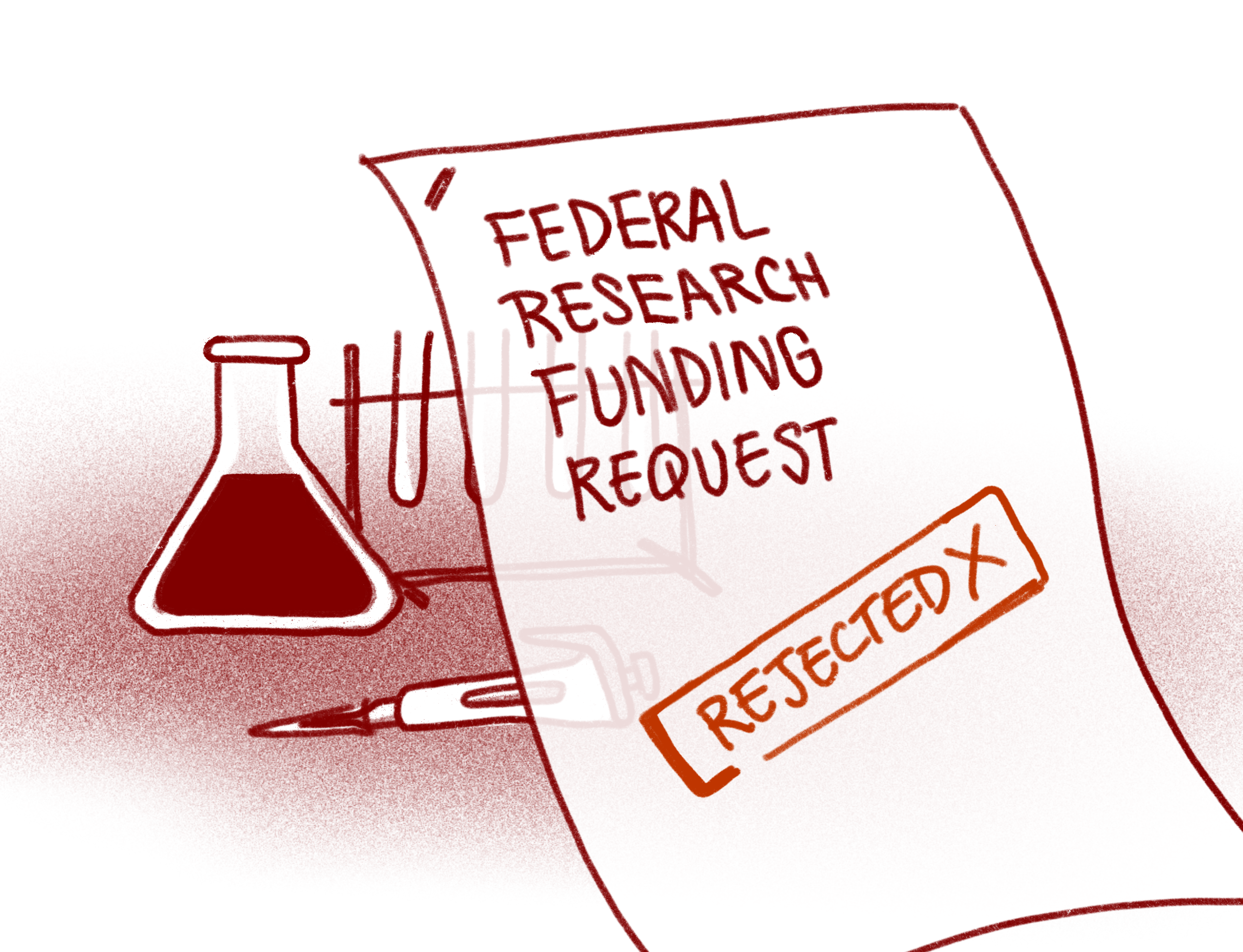
President Trump’s decision to freeze funding to these institutions was not an attack on higher education, as some have claimed. Rather, Mr. Trump simply asserted that universities that receive public funding should comply with civil rights law, promote open discourse and spend intentionally. I happen to agree with the president.
Although almost all federal funding to private universities is given in the form of specialized research grants, these grants are far from special in practice. Harvard, for example, has received between 593 and 684 million dollars in federal research grants every year for the past decade. As specialized research grants have turned into recurring payments, elite universities have expanded non-research spending, now relying mainly on federal dollars to fund research programs.
Universities’ reductions in private research funding have not resulted in reduced tuition for students either. To the contrary, universities are launching expensive new initiatives and programs that often add no value for American taxpayers who are footing the bill.
In 2017, Columbia announced a 100 million dollar investment to “support faculty diversity and inclusion,” according to Dennis Mitchell, then-Vice Provost for Faculty Diversity and Inclusion.
This investment added to a DEI expansion of 85 million dollars from the previous decade.
What exactly was Columbia able to achieve with over 185 million dollars of DEI spending? According to the Foundation for Individual Rights and Expression’s (FIRE) 2025 report, they cultivated a campus that ranked dead last nationally for free speech, earning a letter grade of F, scoring exactly 0 points. It is an environment where a majority of students say they self-censor their speech every month, according to FIRE.
While DEI programs may not have cultivated the “inclusive culture” full of empathy promised by Mitchell, they must have done something in the name of preventing racial and religious discrimination, right?
Surprisingly, they didn’t do that either. Following the Oct. 7, 2023 Hamas terror attack on Israel, “Jews and Israelis at Columbia University were ostracized from student groups, humiliated in classrooms and subjected to verbal abuse as pro-Palestinian demonstrations shook the campus,” according to the university’s task force on antisemitism. Worse, “student complaints were often downplayed or ignored by school officials and faculty.”
Are we supposed to close our eyes and pretend that DEI programs are working? Or, should we acknowledge that a university that spent 185 million dollars on DEI programs somehow built the least inclusive campus in America? Perhaps that 185 million would have been better spent on cutting edge research.
Several elite universities have settled civil rights lawsuits brought by the Trump administration, with Columbia’s 221 million dollar settlement being the largest. Many of these settlements also included provisions to prevent future Title VI violations.
Is it unreasonable to expect universities that receive hundreds of millions of federal dollars annually to comply with civil rights law and cultivate a culture that is open to new ideas? Is it unreasonable to ask those universities, that have spent hundreds of millions on failed DEI programs, to redirect that money towards productive interests, like cutting edge research and financial aid for students?
President Trump’s decision to withhold research funding was never designed to cut research. It was an accountability measure designed to protect students’ civil rights and the very research opportunities that are invaluable to our nation. Evidence suggests his plan is working.
In their settlement, Columbia agreed to eliminate racial quotas and unlawful hiring practices. 21 million dollars were also secured for faculty who had been the victims of several documented incidents of religious discrimination, the largest EEOC public settlement in almost 20 years. Brown has also agreed to deploy 50 million dollars to support workforce development in Rhode Island.
These all seem to be far better uses of capital than adding additional associate directors of DEI.
While several elite schools continue to be places that lack free expression and subsequent diversity of thought, it appears that they are improving. Columbia, Brown and Princeton have all moved up several spots on FIRE’s campus freedoms ranking over the past two years, for example.
Trump’s freeze on funding does not challenge the notion that research is important. Our nation benefits immensely from scientific and economic advancements, many of which originate in university laboratories. But supporting advancement does not mean accepting racism, antisemitism and ignorant spending.
Federal research funding should advance research, not provide universities with the means to neglect their responsibilities to students and taxpayers and violate civil rights law in the process. The question at hand is whether they should be held accountable for how they govern their institutions. I believe they should.