
Priya Satia is the Raymond A. Spruance Professor of International History and a member of Stanford’s chapter of the American Association of University Professors (AAUP)
Those who support the current attacks on academic freedom often do so out of an actively propagated misunderstanding about who academic freedom protects: mistaking it for coddling of entitled professors, when in fact it serves the common good — not least by leaving disciplines to regulate themselves in a manner necessitating limits on “viewpoint diversity.”
Academic freedom protects scholars from outside interference with their teaching, research and extramural speech, to provide the feeling and practical reality of the autonomy necessary to pursue research with integrity. This means protection from wealthy elites who build universities and endow positions and programs; governments; and the university itself, which is beholden to the political and financial interests that fund it.
The premise here is that donors, politicians and trustees lack the expertise and competence to judge scholars’ work; research will be more trustworthy if scholars are left to pursue it according to the standards of their disciplines. The First Amendment protects an individual right to expression; academic freedom protects society’s interest in having a professoriate capable of accomplishing its mission. Its primary objective is not securing scholars’ jobs but securing their ability to serve the common good.
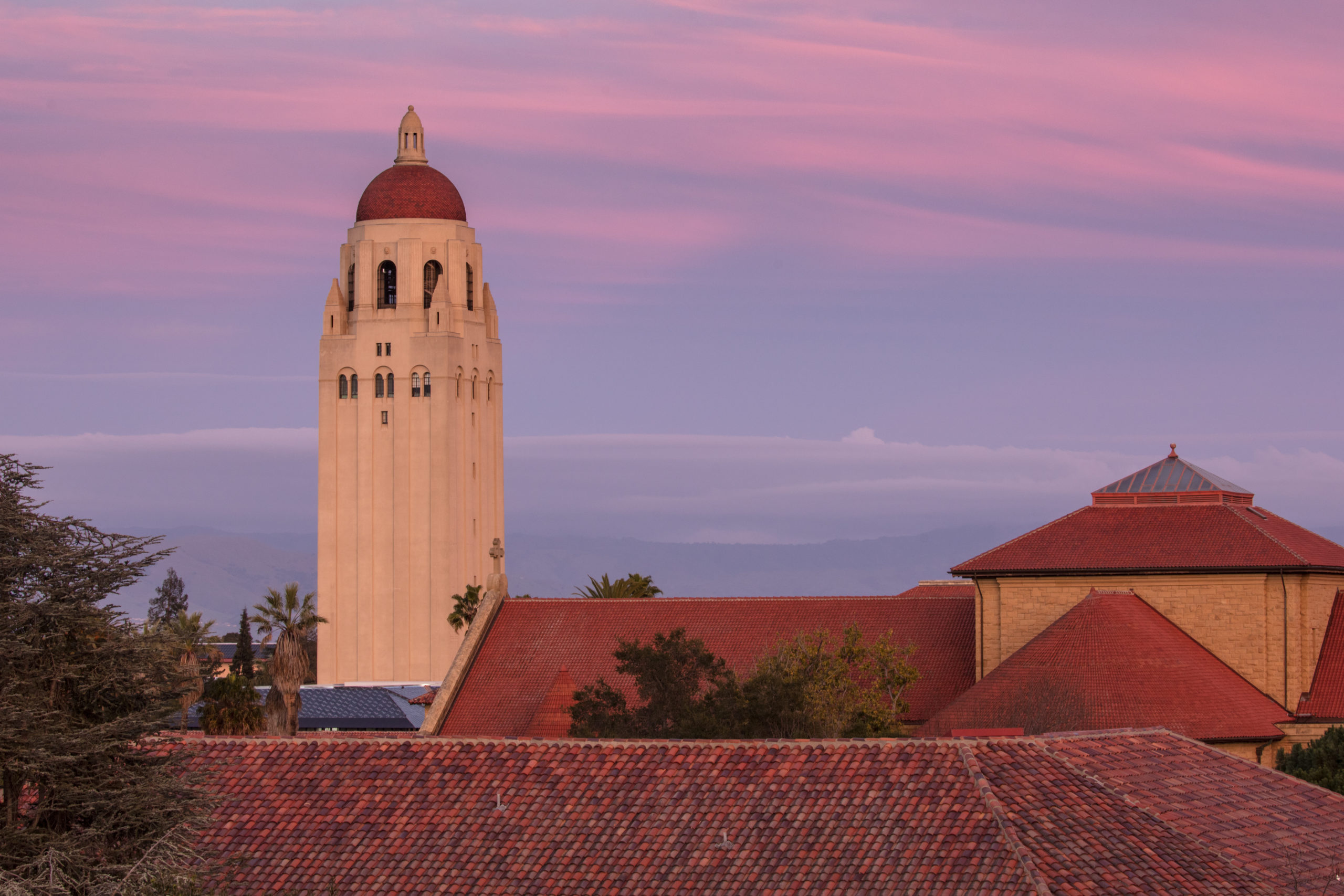
Stanford’s meddling wealthy founders made it a key site in the emergence of the principle of academic freedom. The controversy around the university’s sacking of Economics professor Edward Ross in 1900 led to the founding of the American Association of University Professors (AAUP), which began to define the parameters of academic freedom from 1915. Tenure, peer review and faculty governance were deemed essential to academic freedom.
So too was the right of disciplines to exclude work that doesn’t meet their standards, to reject what isn’t intellectually valid, even if doing so reduces “viewpoint diversity.” If the discipline of Geology collectively determines that the flat-Earth theory doesn’t meet its standards, geologists do not, simply for the sake of “viewpoint diversity,” need to continue to hire flat-Earthers and provide lessons in flat-Earth theory to their students. The scholarly pursuit of truth, over time, requires that some “viewpoints” become extinct. Moreover, the academic freedom of a flat-Earther hired for the sake of “viewpoint diversity” would be violated from the start, as he would be constrained from changing his view and thereby diminishing the diversity of viewpoints in his department.
To be sure, as Paul Brest points out in his recent AAUP column, diversity is necessary to ensure against confirmation biases that inhibit critical inquiry. However entitled Edward Ross was to academic freedom, the eugenicist knowledge he produced was profoundly inaccurate partly because of the homogenous makeup of the professoriate in his time. We can recognize that inaccuracy now partly because the academy has since benefited from inclusion of scholars equipped to challenge such work.
The Trump administration’s push for “viewpoint diversity” endorses the values underlying genuine efforts to increase institutional diversity, but the administration is at once attacking such efforts, while also detaining and defunding those with viewpoints it doesn’t like. It would have us include Ross’s inaccurate racist viewpoint, while shuttering the mechanisms that ensure our ability to question it. Brest fails to appreciate the co-option of the slogan of “viewpoint diversity” into the far-right attack on universities in the manner that Jessica Riskin carefully describes. (See also my comment on Brest’s inaccurate complaint about Riskin’s lack of “empirical analysis.”)
Moreover, the two theorists Brest invokes don’t support his “guess” that departments’ homogeneity produces “unfortunate consequences for…students,…research and academic freedom.” Keith Whittington rather confirms the absence of evidence of liberal indoctrination of students, deprecating political intervention to force greater “viewpoint diversity,” while Steven Teles helpfully explains that, despite the absence of discrimination against conservatives in academia, the perception of discrimination that “has become a feature of conservative identity” reduces conservative pursuit of academic careers — a problem that conservatives must address.
Certainly, every discipline must engage in the self-analysis required to avert intellectual conformity. But to endorse the language of “viewpoint diversity,” even while recognizing (as Brest does) its use as a political “bludgeon,” is to propagate the very ideological sloganeering Brest deplores in the academy. It is falling for a feint in an existential war on academic freedom, autonomy and integrity.
As the flat-Earth example shows, not every viewpoint is intellectually valid — no matter how politically or culturally appealing it may be. It is a disservice to the public to treat different sides of an issue as equally viable if one has been debunked according to the standards of the profession.
Holocaust-denial, 2020-election denial and climate-change denial are popular ideas on the American right today, but historians are justified in excluding Holocaust-denial from their curricula and hiring; political scientists are entitled to exclude 2020 election-denial from theirs; and environmental scientists are right to exclude those rejecting bedrock knowledge about the impact of greenhouse gases. The Republican Party is today a party of intellectually invalid viewpoints. Is there any wonder there are fewer Republicans among faculty?
Academic freedom preserves space for autonomous academic reasoning to enable rejection of intellectually unsuitable ideas for the sake of the common good. This is why it does not protect scholars who fake data or pretend to have expertise they do not have.
Today’s attack on the institution of tenure that affords scholars the space to produce research we collectively benefit from without fear of coercion, comes on top of the steady defunding of public universities that has dramatically increased non-tenured positions. Such enduring and recurring threats to academic freedom make a robust AAUP and continual public education about the meaning and purpose of academic freedom essential.
Last spring, Stanford’s leadership affirmed its commitment to the academic freedom that “allows universities to question orthodoxy and go against prevailing political winds.” But the terrorizing nature of the government’s policies (including kidnappings of scholars) has already substantially curbed our freedom to pursue and share our work — just when misinformation that harms the public is spreading unchecked. This is not simply a personal loss for individual scholars but a collective, social loss. With lasting effects: The derailing of faculty hiring and postgraduate admissions translates to a loss of critical expertise in the medium- to long-term; the very uncertainty now infecting the scholarly life discourages talented potential scholars from taking up that career path.
If Whittington and Teles urge university leaders to ensure faculty diversity, Stanford’s leadership must also go beyond general statements in support of academic freedom in a time when research and teaching are being restricted by politicians’ priorities. They must help the public understand academic freedom’s role in serving the common good and how policies like tenure enable it. They must correct misperceptions of Stanford’s lack of “viewpoint diversity” and explain how disciplines’ self-regulation serves the public. Stanford’s commitment to institutional neutrality demands its leaders speak up when the university’s nature as a “pluralistic forum in which ‘freedom of inquiry, thought, expression, publication, and peaceable assembly are given the fullest protection’” is threatened. That time is now.
The American Association of University Professors (AAUP), founded in 1915, is an association of faculty and other academic professionals based in Washington, D.C. with chapters at colleges and universities across the country devoted to promoting academic freedom. The Stanford chapter of the AAUP includes faculty and teaching staff from all seven schools at Stanford. Its members hold a range of opinions on most topics but are staunchly united in defense of the ability to teach, learn and conduct research and scholarship freely. In this column, members speak for themselves, addressing topics of urgent concern relating to academic freedom.