
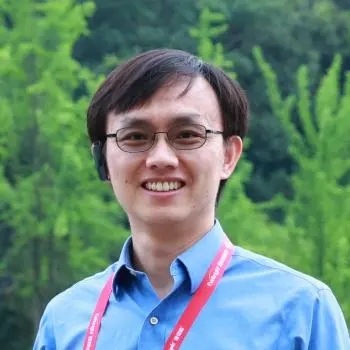
Professor Sheng Xu is one of five Stanford winners of the 2026 Guggenheim Fellowship, alongside economics professor Ran Abramitzky, history professor Joel Cabrita, anthropology professor Angela Garcia and sociology professor Robb Willer.
Xu is the inaugural director of emerging technologies in the department of anesthesiology, perioperative and pain medicine at Stanford University, with a courtesy appointment in electrical engineering. He spent 10 years on the faculty at UC San Diego before joining Stanford in 2025.
His research group is interested in developing new materials and fabrication methods for soft electronics, which combine electronic parts with stretchy elastic material. He has presented his work to the U.S. Congress as a testimony to the importance and impact of NIH funding.
Chosen from a pool of nearly 5,000 applicants, the Class of 2026 Guggenheim Fellows was tapped based on both prior career achievement and exceptional promise.
Xu wrote to The Daily about the fellowship, the future of wearable ultrasound and his advice for students.
The Stanford Daily (TSD): What project(s) will the Guggenheim support, and what are you most excited to pursue during the fellowship year?
Sheng Xu (SX): The Guggenheim Fellowship will support my effort to develop the wearable ultrasound system for continuous, noninvasive monitoring of fetal hemodynamics. Today, fetal monitoring remains largely intermittent and operator-dependent. Technologies such as cardiotocography, fetal electrocardiography and conventional ultrasound provide important information, but they offer only limited snapshots of fetal health. My goal is to create a soft, wireless ultrasound patch that can continuously monitor blood flow in the placenta, umbilical cord and fetal brain.
What excites me most is the possibility of opening a completely new window into fetal physiology. We hope to move beyond measuring only fetal heart rate and uterine contractions, toward directly observing how blood flows through the placenta, cord and brain over time. If successful, this technology could help clinicians better understand fetal development, detect early signs of compromise and ultimately improve prenatal care. Scientifically, I am also excited by the technical challenge: integrating large-area stretchable ultrasound arrays, autonomous vessel-tracking algorithms, ultrafast imaging and wireless electronics into a single system.
TSD: How do you see wearable ultrasound and soft bioelectronics reshaping cardiovascular and chronic disease care over the next decade?
SX: For the past decade, wearable electronics have largely focused on signals near the surface of the body: electrical activity, motion, temperature, sweat and other superficial biomarkers. These measurements are valuable, but many of the most clinically meaningful processes occur much deeper, in the heart, blood vessels, brain, kidneys, uterus and other internal organs. My group’s work in wearable ultrasound aims to extend soft bioelectronics from the skin surface into deep tissues, enabling continuous access to physiological information that was previously available only through episodic measurements in hospitals or clinics.
Over the next decade, I believe wearable ultrasound will help transform care from reactive and episodic to proactive and continuous. In cardiovascular medicine, soft ultrasound patches could continuously track central blood pressure, blood flow, cardiac function, vascular stiffness and tissue perfusion during daily life. For chronic disease management, these technologies may allow clinicians to follow disease progression and treatment response outside the hospital, in real-world settings. The long-term vision is not simply to make ultrasound wearable, but to make deep-tissue physiology continuously visible, interpretable and actionable.
TSD: As a relatively recent arrival to Stanford (and inaugural director of emerging technologies in anesthesiology), what drew you here, and what do you hope to build?
SX: What drew me to Stanford was the extraordinary opportunity to bring engineering, data science and clinical medicine together in one vibrant environment. My research has always lived at the interface of fundamental materials innovation and real-world need. Stanford offers a unique ecosystem where new concepts can be developed in close conversation with physicians, patients, engineers and entrepreneurs.
As Director of Emerging Technologies in Anesthesiology, I hope to build a program that turns perioperative and critical care environments into testbeds for next-generation intelligent and autonomous medical technologies. Anesthesiology is an especially exciting home for this work because it sits at the center of real-time physiology: hemodynamics, respiration, pain, consciousness, perfusion and organ function. My goal is to help create technologies that continuously monitor the body, anticipate deterioration earlier and support clinicians in making better decisions. More broadly, I hope to build a collaborative bridge between Stanford Medicine and Stanford Engineering, training students and postdocs who are fluent in both technological innovation and clinical translation.
TSD: Any advice for Stanford undergraduates or graduate students interested in materials science, bioengineering, or translational device research?
SX: My first advice is to build deep expertise in a core discipline and to truly understand the underlying concepts. Whether it is materials science, electrical engineering, data science, or medicine, strong fundamentals give you the tools to solve problems that others cannot.
At the same time, do not stay confined within one discipline. Take as many courses as you need from across the campus. Attend seminars, even if you understand only 10% of the content. Read as many papers as you can. Each paper you read is like a star in the sky. After you collect enough stars, you begin to see patterns and constellations. You start to understand how different papers connect, what is missing from the pattern and where hidden relationships may exist. That is often where new ideas emerge.
Finally, spend time understanding the real problem before designing the technology. Talk to clinicians, observe workflows, understand patient needs and learn why current solutions are insufficient. Start with the nail, then customize the hammer, not the other way around. In my own experience, some of the most meaningful projects have come from identifying a genuine clinical gap and then asking what new materials, device architectures, algorithms, or sensing modalities could address it.