
50 years.
That was the number that defined Stanford athletics in 2025-26.
When men’s gymnastics captured the NCAA championship in April, the Cardinal extended its unprecedented streak of winning at least one NCAA team championship to 50 consecutive academic years, the longest active streak in college sports.
Yet the 2025-26 season was about more than another national title. Stanford’s second year in the ACC featured conference championships, national title runs and historic individual performances, while also highlighting the challenges facing college athletics in an era shaped by the transfer portal and conference realignment.
The year began with Stanford women’s soccer establishing itself as one of the nation’s premier programs. In just its second ACC season, the Cardinal won both the ACC regular-season and tournament championships before advancing to the national championship match. Stanford finished 21-2-2 overall and reached the College Cup for the third consecutive season before falling to Florida State in the NCAA final.
Women’s soccer was not the only Stanford team competing on the national stage.
Women’s artistic swimming won their second consecutive national MPSF championship in March — their longest national championship streak since their four-peat from 2005-2008.
Men’s gymnastics once again demonstrated why it has become one of the NCAA’s premier dynasties. The Cardinal won its sixth NCAA championship in seven seasons, defeating Oklahoma to claim the program’s 11th national title. The victory secured Stanford’s 50th consecutive academic year with an NCAA team championship and reinforced the university’s reputation as the nation’s most successful athletic department.
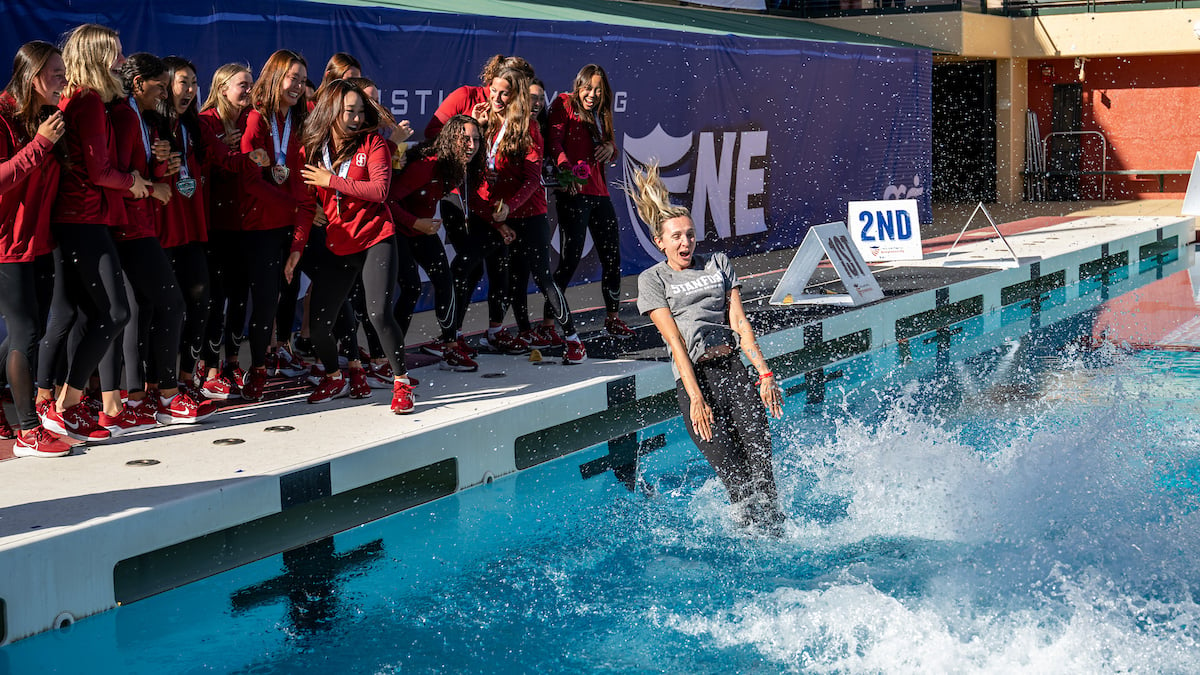
Women’s water polo secured the MPSF national championship soon after men’s gymnastics took home the win. This is their fourth MPSF national championship in the last five years.
Women’s golf added another chapter to the legacy in May. Stanford captured the NCAA championship, giving the athletic department multiple NCAA team titles for the 12th consecutive year and pushing the Cardinal’s total to 139 NCAA team championships.
The Cardinal took home more hardware in women’s sailing in mid-May, winning the ICSA Women’s Fleet Race National Championship for the fourth consecutive year. Men’s sailing took second. Just last week, women’s rowing earned another conference championship for the Cardinal before winning a second-place NCAA title in the championships.
The success was not limited to championship-winning teams.
Across Stanford athletics, programs continued adjusting to life in the ACC. Women’s soccer immediately established itself as a conference power, while teams across the department faced increased travel demands and new rivalries resulting from the move away from the Pac-12. The ACC transition continued to reshape schedules, recruiting and the overall student-athlete experience during the university’s second season in the conference.
Not every storyline was positive. Stanford women’s basketball endured another difficult season and entered the offseason amid significant roster turnover and questions about the program’s future direction. The challenges facing one of Stanford’s most historically successful programs served as a reminder that sustained excellence is never guaranteed, even on The Farm.
Still, the broader picture remained familiar.
Stanford finished the year the same way it has finished nearly every year for the last half-century: competing for championships. Women’s soccer played for a national title. Men’s gymnastics won one. Women’s golf added another. Numerous other programs reached NCAA tournaments and championship events.
As college athletics continues to change through conference realignment, Stanford’s formula has remained remarkably consistent. Fifty years after the streak began with men’s water polo in 1976, the Cardinal once again proved its ability to compete at the highest level across dozens of sports.
For Stanford athletics, 2025-26 was not merely another successful season. It was a reminder that even amid unprecedented change, the pursuit of championships remains central to the university’s athletic identity.